Dental Prosthetics & Implants
A dentist and dental technician all in one
Why Understanding Both Worlds Can Shape the Quality of Complex Dental Restorations
From dental craftsmanship to science-based dentistry: How the combination of two educational paths opens up new possibilities for sophisticated dental restorations.

Key Points at a Glance
- Dentists and dental technicians share the same goals—function, aesthetics, and long-term stability—but come from different educational backgrounds.
- Those who have trained in both professions can take dental technical feasibility into account as early as the diagnosis and planning stages—which is particularly important for bite elevation, veneers, and implant prosthetics.
- Dual certification does not replace the specialized laboratory; rather, it improves coordination between the dental practice and the dental laboratory.
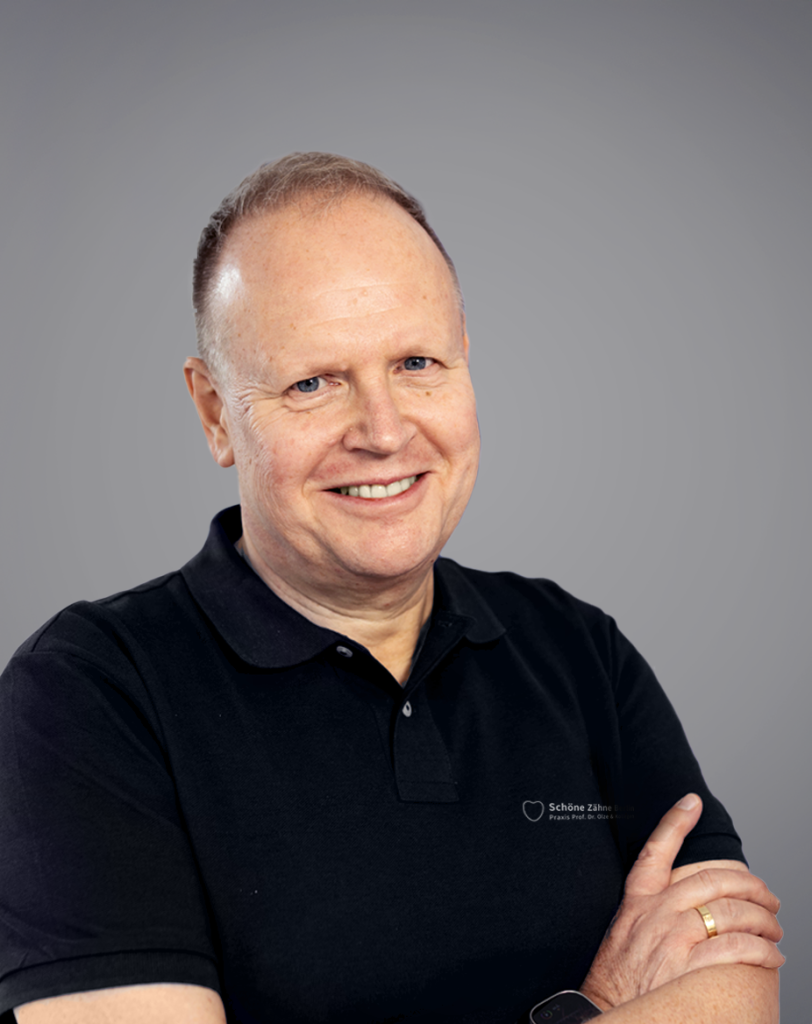
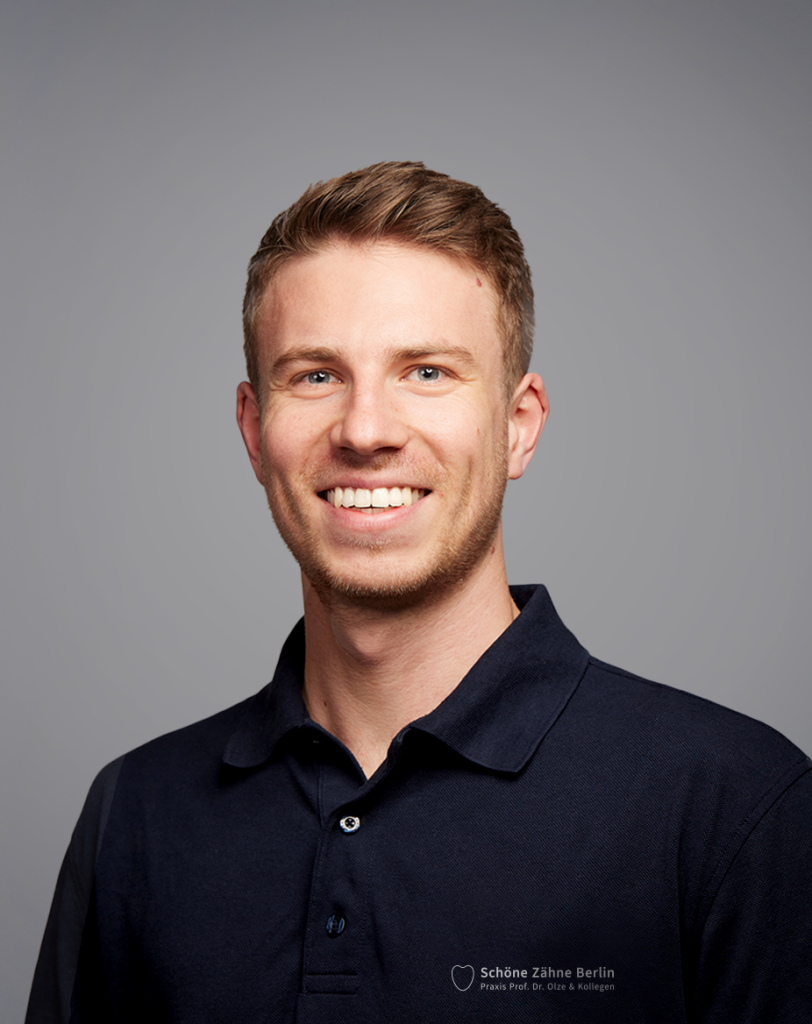
- At Schöne Zähne Berlin, dentist Moritz Weiler brings both areas of expertise to the practice—integrated into the synoptic treatment planning approach under Prof. Dr. Andreas Olze.
Two professions, one common goal: function, aesthetics, and long-term stability
The fabrication of high-quality dental prostheses is a complex process involving various professional groups.
The dentist examines the patient, makes a diagnosis, develops a treatment plan, and is responsible for its clinical implementation. The dental technician translates the clinical specifications into a customized dental restoration. He or she designs the tooth shapes, surfaces, contact points, material transitions, and the aesthetic appearance of the final restoration.
Both perspectives are crucial to the outcome. However, the training paths and respective areas of specialization differ significantly: While the dentist must assess the biological, functional, and medical aspects of a treatment, the dental technician focuses on the practical and technical aspects of its implementation.
But what happens when a dentist has completed both training paths? This results in a unique professional perspective: Clinical planning can take into account the technical feasibility of the restoration from the very beginning. Conversely, clinical requirements are directly incorporated into the design considerations.
In short, thisdoes not automatically lead to better treatment outcomes. However, it does open up the possibility of a particularly close connection between diagnosis, planning, and dental laboratory work.
Why Dental Knowledge Begins with the Diagnosis
One often underestimated challenge in modern prosthetics is that the subsequent technical implementation must be taken into account as early as the initial diagnostic decision. This is particularly true for complex restorations.
Prosthetic rehabilitation cannot be planned based solely on the question of which teeth need to be crowned or replaced. Rather, numerous other factors must be taken into account:
- What are the anatomical requirements?
- How much healthy tooth structure is left?
- What are the biologically and technically reasonable limits for specimen preparation?
- What material thicknesses are required for the planned restoration?
- What design options are available in terms of tooth shape?
- How can static and dynamic occlusal contacts be integrated?
- What aesthetic changes are feasible from a functional standpoint?

A dentist who has completed vocational training in dental technology is familiar with many of these issues not only through collaboration with the laboratory but also through his or her own hands-on experience. He or she has learned how dental restorations are created, what technical limitations exist, and what consequences certain clinical requirements may have for the subsequent fabrication process.
This understanding can make a significant difference even during the planning stage of treatment.
Particularly relevant for complex prosthetic restorations
The advantages of such a connection become particularly evident when it is not just individual teeth that need to be restored, but rather larger sections of the masticatory system that need to be reconstructed.
Bite Elevation and Restoration of the Vertical Dimension
In patients with severe tooth wear, the original vertical dimension of the occlusion may be significantly altered. Restoring the bite height—see the technical article “Bite Height Restoration in Cases of Tooth Wear ” for more information—therefore requires comprehensive functional and prosthetic planning. This involves considering the planned tooth shapes, spatial relationships, material thicknesses, and functional movement patterns as a whole.
Dental laboratory experience helps identify the available anatomical and design options as early as the planning stage. This applies, for example, to the design of the occlusal surfaces, the height of individual restorations, the distribution of contacts, and the aesthetic reconstruction of the anterior teeth—such as in cases of bite elevation using all-ceramic restorations.
Veneers and Highly Aesthetic Ceramic Restorations
With veneers and other all-ceramic restorations, the choice of material alone does not determine the outcome. Equally important are the preparation design, layer thickness, translucency, surface texture, shade, and how well the restoration integrates with the patient’s individual appearance.

The ability to take dental restoration options into account as early as the clinical planning stage can be particularly advantageous in aesthetically demanding cases of cosmetic dentistry —see also veneers using minimally invasive techniques and ceramic anterior tooth restorations.
Implant Prosthetics
Even with implant-supported dentures, surgical and prosthetic planning must be closely coordinated. The implant position should not be determined solely based on the existing bone conditions. It is equally important to consider what type of prosthetic restoration will ultimately be placed on the dental implants.
The desired tooth position, the direction of force, the design of the superstructure, and ease of cleaning must be taken into account before implantation—especially in challenging cases such as complex implant cases. A solid understanding of dental technology can help ensure that the ultimate prosthetic goals are incorporated into the clinical planning at an early stage.
The Combination of Artisanal Precision and Digital Dentistry
Dental technology has undergone fundamental changes in recent years. Digital intraoral scanners, CAD/CAM designs, virtual articulation, digital facebows, and modern manufacturing processes have opened up numerous new possibilities.
Nevertheless, one key question remains: How is the information obtained digitally interpreted from a professional standpoint and translated into care that is both functionally and biologically meaningful?
A digitally designed restoration is not automatically a good prosthetic restoration. Its quality continues to depend on the correct indication, clinical preparation, design, and final verification. This also applies to digital functional data, such as that provided by 4D analysis—for more on this, see the technical article “MODJAW® and 4D Functional Diagnostics.”
Those who are familiar with both clinical requirements and dental laboratory fabrication processes can evaluate digital planning results from both perspectives. This ability to bridge the two fields is particularly important in cases of extensive restorations.
Why Collaboration with the Dental Technician Remains Essential Anyway
Dual certification should not be confused with the notion that a single dentist could replace the entire range of dental technology expertise. Modern dental technology is an independent, highly specialized field. Experienced dental technicians possess extensive knowledge in materials science, ceramic layering, CAD/CAM technology, design, and aesthetic planning.
Even a dentist who has completed dental technology training therefore still needs to collaborate with specialized dental technicians in the dental laboratory. The particular advantage lies in the fact that communication between the two disciplines can take place on a shared professional foundation.
Clinical requirements do not need to be laboriously translated into technical instructions. Dental laboratory capabilities and limitations can be taken into account as early as the treatment planning stage. This can reduce the need for follow-up questions, facilitate coordination, and—especially in complex cases—contribute to a more efficient interdisciplinary workflow.
Two Complementary Paths to Training: Dentist Moritz Weiler
At Schöne Zähne Berlin, this connection is more than just a theoretical concept.
Dentist Moritz Weiler first completed his training as a dental technician from 2016 to 2019 and then studied dentistry at the University of Greifswald from 2019 to 2024. Since 2025, he has been working as an assistant dentist at our practice in Berlin Mitte. In addition, he is pursuing a doctoral project in the field of dental prosthetics at the University of Greifswald.
His clinical practice focuses on, among other things:
- Custom-designed aesthetic composite restorations
- All-ceramic veneers, inlays, partial crowns, dental crowns, and bridges
- High-quality dental prosthetics and implant-supported dentures
- Functional splint therapy
- digital dentistry
What makes his educational background unique is that he is familiar with both perspectives from his own professional experience. He understands how a dental restoration is created, the design requirements it must meet, and the clinical conditions necessary for its successful placement. This combination is particularly valuable when it comes to restorations that are both aesthetically and functionally demanding.
Under the professional guidance of Prof. Dr. Andreas Olze, this approach is integrated into a comprehensive treatment plan that combines clinical diagnosis, functional planning, and prosthetic implementation.
More Than Just Dual Specialization: Synoptic Treatment Planning Is Key
The combination of dental and dental technology training provides a valuable professional foundation. However, it does not replace the comprehensive diagnostic and therapeutic planning required for complex restorations.
Particularly in patients with significant tooth wear, reduced occlusal height, extensive tooth loss, or failed restorations, it is necessary to bring together numerous disciplines:
- Functional Diagnostics and Occlusion Analysis
- Restorative Dentistry and Prosthodontics
- Periodontology and Tooth Preservation
- Implantology and, if necessary, bone augmentation
- Dental Technology and Materials Science
- Digital Diagnostics and Treatment Planning
The particular challenge lies in not viewing these individual pieces of information in isolation. If treatment has already been planned elsewhere or has failed, a second opinion from a dentist can help reassess the overall picture.
In short, agood prosthetic restoration does not begin with the question of which crown to fabricate. It begins with the question of what functional and biological outcome is desired for the individual patient—and how that outcome can be achieved while taking all individual factors into account.
Our Mission: To combine clinical expertise with an understanding of dental technology
At Schöne Zähne Berlin, we view high-quality dentistry as the interplay of various areas of expertise. The combination of university-level diagnostics, clinical experience, modern digital functional analysis, and dental laboratory expertise creates a foundation for planning complex prosthetic restorations.
Dentist Moritz Weiler’s dual qualifications are a key component of our treatment approach. They represent the combination of two professional fields that are traditionally closely linked but require different types of training.
After all, high-quality dental restorations are not created solely through technical skill, nor solely through medical diagnostics. They are created when both areas of expertise work together from the very beginning.
Our goal is to make this connection work for our patients—especially when the focus is no longer on treating a single tooth, but rather on the functional and aesthetic restoration of the entire masticatory system, such as in the context of extensive dental rehabilitation.
Your Contact Person
Your Contacts: Dentist and Dental Technician
Clinical planning and dental laboratory expertise combined in one person—at our practice in Berlin Mitte, integrated into our comprehensive treatment planning.
Read more: Related articles
- Dental laboratory
- Bite elevation and worn teeth
- Bite elevation with all-ceramics
- Veneers Using a Minimally Invasive Technique
- Anterior Tooth Restorations with Ceramic
- Implant complex case
- MODJAW® and 4D Functional Diagnostics
- Dental Crowns for Stable Tooth Preservation
- An Overview of Types of Dental Prosthetics

From inlays to dentures, made of all-ceramic materials and crafted in a master dental laboratory.
About Our ServicesFrequently Asked Questions
What are the advantages of a dentist who has also trained as a dental technician?
A dentist who has completed dental technology training is familiar with both the clinical requirements and the manual and technical fabrication processes involved in making dental prostheses. This enables the dentist to take into account the possibilities and limitations of dental technology as early as the treatment planning stage. This facilitates coordination between the dental practice and the laboratory, particularly in cases involving complex prosthetic restorations.
Are dental prosthetics better when the dentist is also a dental technician?
Having dual qualifications does not automatically guarantee a better treatment outcome. However, it does provide an additional professional perspective. The key factors remain an accurate diagnosis, careful treatment planning, the quality of the dental laboratory work, and the clinical implementation.
Why is collaboration between the dentist and the dental technician particularly important when raising the bite?
When correcting a bite, it is often necessary to reshape multiple teeth at the same time. In this process, the vertical dimension, the morphology of the occlusal surfaces, dynamic tooth contacts, material thicknesses, and aesthetics all play an important role. Close collaboration makes it possible to coordinate functional and dental laboratory requirements at an early stage.
How important is dental technology knowledge when it comes to veneers?
When it comes to veneers, there is much more to consider than simply selecting the right ceramic material. The preparation design, material thickness, translucency, color effect, and surface texture must all be coordinated. Knowledge of dental technology can help ensure that future design options are taken into account as early as the clinical planning stage.
Why is dental laboratory experience important when it comes to implants?
The position of the implant has a significant impact on the subsequent prosthetic design. Therefore, even before implantation, the desired tooth position, the load-bearing conditions, the design of the prosthesis, and ease of cleaning must be taken into account. An understanding of dental laboratory fabrication processes facilitates coordination between surgical and prosthetic planning.
What sets dentist Moritz Weiler apart at Schöne Zähne Berlin?
Moritz Weiler first completed an apprenticeship as a dental technician from 2016 to 2019 and then studied dentistry at the University of Greifswald from 2019 to 2024. He thus combines a completed vocational training program in dental technology with a degree in dentistry. He has been working at Schöne Zähne Berlin in Berlin Mitte since 2025.
Can a dentist with dual qualifications replace a dental laboratory?
No. Modern dental technology is a distinct specialty. High-quality ceramic restorations and complex prosthetic designs continue to require the expertise of experienced dental technicians. The advantage of dual certification lies in a deeper understanding and improved communication between the two fields.
What does "synoptic treatment planning" mean in dentistry?
A comprehensive treatment plan involves considering all relevant findings and treatment disciplines together. These include, among others, tooth preservation, periodontology, functional diagnostics, prosthodontics, implantology, and dental technology. The goal is a coherent treatment plan in which individual measures are not planned in isolation but rather in the context of the entire masticatory system.
What role does digital dentistry play in the collaboration between dentists and dental technicians?
Digital intraoral scanners, CAD/CAM techniques, and dynamic functional analyses enable more precise transmission and joint evaluation of diagnostic information. They can improve communication between the dental practice and the laboratory. However, digital technology does not replace professional interpretation and clinical oversight.
For which patients is this combination particularly interesting?
It is particularly useful for patients with extensive tooth wear, reduced occlusal height, complex dental prostheses, aesthetically demanding reconstructions, or previously failed prosthetic restorations. In such cases, medical and dental technical aspects must be closely coordinated.
Scientific Basis
Guidelines & Studies on This Topic
This professional article is based on the guidelines of the dental associations (DGZMK/AWMF) and on studies regarding communication between dentists and dental technicians, as well as digital workflows in prosthodontics.
- S2k GuidelineDigital Impression Taking with Intraoral ScannersDGZMK · AWMF · 2025PDF
- S2k GuidelineDental Functional AnalysisDGZMK · AWMF · 2022PDF
- StudyCommunication Methods and Production Techniques in the Fabrication of Fixed Prostheses: A UK-Based Survey. Part 1: Communication MethodsBritish Dental Journal · 2014DOI
- StudyQuality of Communication Between Dentists and Dental Laboratory Technicians Regarding Fixed Prosthodontics in Riyadh, Saudi ArabiaSaudi Dental Journal · 2017DOI
- StudyAssessment of Communication Quality Through Work Authorization Between Dentists and Dental Technicians in Fixed and Removable ProsthodonticsApplied Sciences · 2022DOI
- ReviewDigital Workflows in ProsthodonticsAustralian Dental Journal · 2025DOI
Guidelines are decision-making tools for dentists. We’ll determine which treatment is right for you during a personal consultation.
You Might Also Be Interested In


Contact & Directions
You can find us here
Address
Friedrichstraße 186,
, 10117 Berlin
U Stadtmitte (U2, U6)
U Hausvogteiplatz (U2)
Opening hours
Mon–Thu 8:00 a.m.–8:00 p.m.
Fri 8:00 a.m.–6:00 p.m.
Telephone
Acute pain outside of office hours? Dental emergency service: 030 – 89004-333 or www.kzv-berlin.de