


Dental Second Opinion
Second Opinion from a Dentist in Berlinfor complex treatments and unsuccessful procedures
Making an informed decision requires more than just another opinion—we evaluate medical findings, treatment plans, and the causes of past problems.
With the expertise of Prof. Dr. Andreas Olze and Prof. Dr. Fouad Khoury—before extensive restorations, bite adjustments, and implant treatments, or when a treatment has not produced the desired result.
35+ years of experience
4.8 stars on Google
jameda rating: 1.4
second opinion
Making an informed decision requires more than just another opinion
When extensive dental treatment is needed, or when previous treatments have not produced the desired results, the issue goes far beyond individual teeth: it involves function, aesthetics, tooth preservation, long-term stability, and—not infrequently—significant financial and personal decisions.
At our practice in Berlin Mitte, we offer you a scientifically sound second opinion in dentistry, drawing on the expertise of Prof. Dr. Andreas Olze and Prof. Dr. Fouad Khoury. We evaluate findings in a nuanced manner, critically examine treatment plans, analyze the causes of problems that have arisen, and identify medically sound alternatives.
For people who are facing a difficult dental decision or are looking for a new perspective after receiving unsatisfactory treatment.
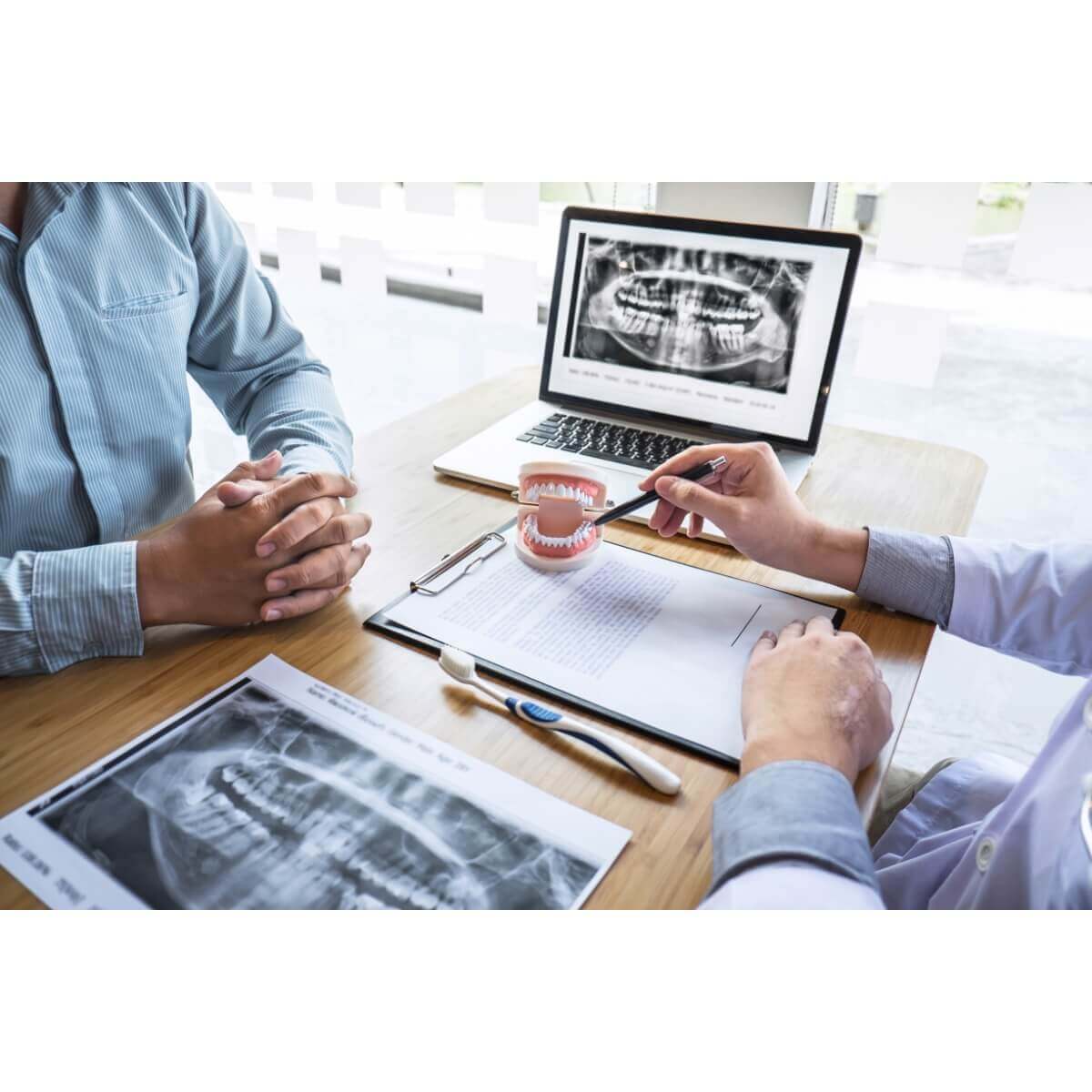
When is it a good idea to get a second opinion?
Getting a well-informed second opinion from a dentist can be particularly important in two situations.
Before Treatment
A big decision is coming up
- You have been recommended to undergo extensive dental restoration or comprehensive dental treatment
- A bite adjustment is planned for cases of severe tooth wear or abrasion-induced malocclusion
- Several teeth are severely damaged—should they be saved or replaced?
- Comprehensive aesthetic and functional rehabilitation is planned
- Implants and complex bone grafting appear to be necessary
After treatment
The result is not convincing
- Complications or unsatisfactory results occurred following treatment
- Dentures, implants, or prosthetic restorations repeatedly cause problems
- A treatment failed or was not completed
- You were told that an implant or bone graft was not possible
- Are you looking for an independent professional assessment before moving forward?
Second Opinion Following Failures and Complications
What is the cause—and how can the situation be improved in the long term?
Not every treatment leads to the desired result. Our goal here is not to criticize previous practitioners across the board, but rather to provide an objective analysis of the current situation. Depending on the findings, we examine, among other things:
- Functional complaints following dental restoration and problems following a bite elevation
- Problems with crowns, bridges, and other dental restorations
- Complications Following Implant Placement and Bone Augmentation
- unsatisfactory aesthetic or functional results
- repeated fractures, loosening, or technical problems
- Ways to Preserve Teeth and Existing Dental Restorations
- Options for making corrections or completely reworking the plan
Two scientific experts—a nuanced assessment
Both professors are involved in the evaluation of the findings, depending on the specific medical issue at hand.

Director of Dental Services
Prof. Dr. med. dent. Andreas Olze
Complex prosthetic and functional rehabilitations
Expertise in extensive dental restorations, complex dental prostheses, bite elevation, and the rehabilitation of severely worn dentition.
The focus is on the initial functional condition, the long-term durability of the restoration, the preservation of existing tooth structure, and the coordination of treatment steps—including when analyzing failed prosthetic and functional treatments.

Implantology & Bone Augmentation
Prof. Dr. med. dent. Fouad Khoury
Implantology and Complex Bone Reconstructions
Involved in complex implantology cases: bone reconstruction, use of autogenous bone, and established augmentation techniques, including the Khoury shell technique.
This is particularly relevant when implant placements or previous bone augmentation procedures have been problematic, or when no satisfactory implant solution has been found to date.
What are we evaluating?
A good second opinion is not limited to confirming or rejecting a treatment plan. What matters most is taking a comprehensive view of the entire dental situation—with the goal of providing a clear evaluation and a realistic assessment of the available options.
- 01
Is the diagnosis complete and clear?
- 02
Which teeth can be preserved in the long term?
- 03
Is the proposed treatment plan functionally and prosthetically sound?
- 04
Have the functional requirements been taken into account for a planned bite elevation?
- 05
What are the alternatives in implantology and bone surgery?
- 06
Are there less invasive or biologically more appropriate options?
- 07
What are the possible causes of complications or failures that have already occurred?
- 08
Which structures and existing services can be maintained?
- 09
How should the long-term outlook and potential risks be assessed?
How does the second opinion process work?
Preliminary Review and Documentation
Please send us your medical reports, X-rays, photos, and your current treatment plan. This will allow us to determine whether your inquiry aligns with our areas of expertise.
Review of Findings
The documents will be carefully reviewed—with the involvement of Prof. Dr. Olze and Prof. Dr. Khoury, depending on the specific issue.
Examination and Consultation
During your appointment at our office on Friedrichstraße, we will assess your clinical condition and discuss your treatment options in detail.
Your Basis for Decision-Making
You will receive a comprehensive assessment—and, if you wish, a detailed written second-opinion report as well.
Preparation
These documents help us in our assessment
- Previous Treatment Plan and Cost Estimate
- Current and older X-rays, existing CT scans
- intraoral and, if necessary, extraoral photos
- Information about treatments that have already been performed
- existing models or digital scans
- In the event of complications: document the course of events as completely as possible
We will discuss with you which documents are required for your specific case before the appointment.

Who is a second opinion intended for—and how much does it cost?
Our second opinion service is designed for people with a specific—and often complex—dental issue who are seeking a solid basis for making a decision. We deliberately take the time to review each case—which is why this service is not a non-binding informational consultation or another free evaluation.
A prerequisite is a willingness to take a serious look at one's own treatment situation and to seriously consider a professionally sound solution.
There is no obligation to have a recommended treatment performed at our practice.
For particularly complex issues, the cost may vary—in such cases, we will discuss the costs with you in advance in a transparent manner. Reimbursement depends on your insurance provider and your plan.
Are you facing a difficult dental decision?
Please send us your existing medical records and your current treatment plan. We will determine whether your specific situation can be appropriately evaluated as part of our second opinion—whether prior to extensive restoration, bite elevation, or implant treatment, or following unsatisfactory treatment.
A well-informed decision begins with a well-informed assessment.
Frequently Asked Questions About Dental Second Opinions
Select a topic—the answers will appear when you click. Can't find your question here? We'd be happy to answer it personally.
General Questions About DentalSecond Opinions: 6 Questions
When is it a good idea to get a second opinion from a dentist?
Seeking a second opinion is particularly advisable for extensive, costly, or medically complex dental treatments. These include, for example, complete dental restorations, bite elevation, extensive prosthetic rehabilitation, implant restorations, and complex bone grafts. Even if previous treatments have not yielded the desired results or complications have arisen, a new professional evaluation can provide important insights.
Why should I have a complex treatment plan reviewed again?
Extensive dental treatments often have long-term consequences. They may involve the loss of natural tooth structure, surgical procedures, and significant financial costs. A second opinion allows you to reevaluate the completeness of the diagnosis, the medical necessity of the planned procedures, and possible treatment alternatives.
What sets your second opinion apart from a regular dental consultation?
Our second opinion service focuses on an in-depth, specialized evaluation of a specific—and often complex—treatment situation. Prof. Dr. Andreas Olze and Prof. Dr. Fouad Khoury are actively involved in evaluating the findings based on their respective areas of expertise. This is not a non-binding informational consultation, but rather a well-founded basis for decision-making.
Does it still make sense to get a second opinion if I've already sought out several other opinions?
That depends on the specific situation. What matters is not the number of opinions you’ve received so far, but whether your medical issue has been adequately evaluated from a technical and diagnostic standpoint. If you still have specific medical concerns or would like to have a complex treatment option reviewed, a specialized second opinion may be helpful. The prerequisite is that there is a serious and well-defined medical issue.
Do I have to get treatment at your practice afterward?
No. The second opinion is intended to provide you with an additional professional basis for making a decision. You decide for yourself whether and where you would like to undergo any recommended treatment.
Is it possible to get a second opinion even if I don't have a specific treatment plan yet?
Yes, provided there is a specific, complex dental issue. For example, a second opinion may be helpful if you want to weigh different treatment options or if you haven’t yet found a satisfactory solution for your dental situation.
Second Opinion on Comprehensive Restorations and ComplexDental Prosthetics: 4 Questions
Is a complete dental restoration always necessary when many teeth are damaged?
No. Even in cases of extensive dental damage, it is necessary to assess on a case-by-case basis which teeth are truly beyond salvage and which can be restored. A complete dental restoration should not be performed solely on the basis of a uniform aesthetic goal. The key factors are the prognosis for each individual tooth, the functional situation, and the long-term durability of the planned restoration.
How can I have someone verify whether the proposed dental treatment is medically necessary?
To this end, clinical findings, X-rays, existing treatment plans, and, if applicable, additional diagnostic records are evaluated. Among other things, the assessment considers whether the teeth are worth preserving, periodontal and endodontic findings, the planned prosthetic restoration, and possible alternatives. In complex cases, a final assessment also requires an appropriate clinical examination.
Are there alternatives to having multiple crowns placed?
That depends on the condition of the existing teeth. Depending on the initial situation, options such as partial crowns, veneers, adhesive restorations, or other tooth-preserving treatments may be considered. Whether such alternatives are medically appropriate must be assessed for each tooth individually and in the context of the entire dentition.
What should be given special attention during extensive prosthetic rehabilitation?
Key factors include a thorough diagnosis, the prognosis for each individual tooth, functional planning, the alignment of the upper and lower jaws, and the long-term durability of the restoration. The biocompatibility, reparability, and future expandability of the dental prosthesis should also be taken into account.
Second Opinion on Bite Correction andAbrasive Bite: 5 Questions
When is bite correction medically necessary?
A bite elevation may be necessary in cases of severe tooth wear, significant loss of tooth structure, or altered functional conditions. Whether a change in the vertical dimension is actually necessary and to what extent it should be performed depends on the individual clinical findings. A bite elevation should always be part of a comprehensive functional and prosthetic treatment plan.
Is a bite adjustment always necessary for severely worn teeth?
No. Severely worn teeth do not automatically mean that the bite height needs to be adjusted. First, it is necessary to assess what functional and anatomical changes are actually present and what reconstruction options are available. The dentition’s existing ability to compensate also plays a role.
What is an abrasion denture?
The term “abrasive dentition” refers to a dental condition in which significant portions of the natural hard tooth structure have been lost due to mechanical tooth wear. Often, the chewing surfaces are flattened and the teeth are shortened. The causes and extent of the wear must be assessed on a case-by-case basis. In addition to mechanical wear, attrition and erosive processes may also be involved.
Can a bite adjustment cause discomfort in the temporomandibular joint or the masticatory muscles?
Changes in bite height and occlusion can affect the stomatognathic system. Whether symptoms develop depends on various individual factors. Therefore, careful functional diagnosis, a well-defined treatment plan, and, if necessary, a trial treatment are important.
Before final restoration, how can you determine whether a planned bite elevation will work?
Depending on the initial situation, diagnostic wax-ups, mock-ups, splints, or temporary restorations may be used. These allow for an assessment of the planned changes in terms of function, aesthetics, and tolerability before the final prosthetic restoration is performed.
Second Opinion on CosmeticDentistry: 3 Questions
Are veneers always the best solution for beautiful teeth?
No. When indicated, veneers can provide an excellent aesthetic restoration. However, it is important to assess how much natural tooth structure would need to be removed and whether less invasive alternatives are available. Depending on the initial condition, additive composite restorations or other treatment options may also be appropriate.
When are crowns necessary instead of veneers?
Crowns are particularly appropriate when a tooth has sustained extensive damage and requires a restoration that covers a large portion of its tooth structure. The decision depends on the remaining tooth structure, the load-bearing conditions, and the extent of the defect. A crown should not be chosen solely for aesthetic reasons if a restoration that preserves more tooth structure is sufficient.
Is it possible to have a veneer treatment that has already been planned reviewed again?
Yes. This allows for an assessment of the medical indication, the planned restoration, the choice of materials, the aesthetic goals, and the functional load. Especially when treating multiple teeth, it is important to consider the effects on the natural tooth structure and the entire dentition.
Second Opinion on Implants and ComplexBone Grafting: 6 Questions
Are implants generally not an option in cases of severe jawbone loss?
No. Significant bone loss can make implant placement more difficult or require additional surgical procedures. Under the right conditions, missing bone can be reconstructed using various augmentation techniques. Whether such treatment is possible and advisable depends on the individual’s anatomy, bone quality, initial medical condition, and the associated risks.
I was told that I'm no longer a candidate for implants. Is it worth getting a second opinion?
It is precisely in situations like these that a specialized second opinion can be helpful. Modern bone augmentation offers a wide range of options. However, not every severe bone defect can be reconstructed. An individualized examination and an assessment of the available imaging are necessary to evaluate the actual possibilities and limitations.
What is meant by "complex bone augmentation"?
Complex bone augmentation is a surgical procedure used to reconstruct missing jawbone tissue. Depending on the defect, horizontal or vertical augmentation may be necessary. Various techniques and materials are used for this purpose. Situations involving large three-dimensional bone defects or cases where previous augmentation attempts have failed are particularly challenging.
What is the Khoury shell technique?
The shell technique developed by Prof. Dr. Fouad Khoury is a method for reconstructing jawbone. In this procedure, thin cortical bone plates taken from the patient’s own bone are used to form a three-dimensional boundary around the augmentation site. The space between these plates is filled with bone particles. This procedure is particularly suitable for complex horizontal and vertical bone defects.
Is it possible to perform reconstruction again even after a failed bone graft?
In certain cases, additional bone augmentation procedures are possible. This requires a careful analysis of the causes of previous failure, the remaining bone structures, and the local tissue conditions. The individual healing process and potential risk factors must also be taken into account. Therefore, the decision to perform another augmentation is always an individualized one.
Is a CBCT scan required to obtain a second opinion on dental implants?
Not necessarily. Whether three-dimensional X-ray imaging is necessary depends on the clinical question and the images already available. Existing CT scans can often be used for an initial expert assessment. Additional imaging should only be performed if it is medically appropriate and necessary.
Second Opinion After Failures andComplications: 6 Questions
Can I get a second opinion if I've lost my implants?
Yes. The loss of an implant should be investigated to determine possible biological, surgical, anatomical, and prosthetic causes. These include, for example, inflammation, bone conditions, the load-bearing situation, and implant position. Depending on the initial situation, other treatment options may be available.
What can be done if a bone graft has not been successful?
First, it is important to determine why the augmentation did not produce the desired results. Possible causes may include, among others, impaired wound healing, infections, insufficient stability, or unfavorable anatomical conditions. Based on this analysis, it can be determined whether another bone reconstruction or an alternative treatment option is appropriate.
Can a botched bite correction be fixed?
In many cases, functional and prosthetic problems can be reevaluated and, if necessary, treated after a bite elevation. The key factors are the changes that have been made, the symptoms present, and which structures are still intact. A new rehabilitation plan requires particularly careful diagnostic and functional planning.
What if my new dentures aren't satisfactory in terms of function or appearance?
First, the cause of the dissatisfaction should be investigated. Possible causes include, for example, problems with occlusion, tooth alignment, aesthetics, the choice of materials, or the prosthetic design. Depending on the findings, corrections, repairs, or a new restoration may be appropriate.
Can multiple consecutive instances of medical malpractice or treatment failures be evaluated?
Yes. Especially when treatment attempts have failed multiple times, it is important to take a comprehensive look at the entire course of treatment. This includes previous diagnoses, surgeries, prosthetic restorations, X-rays, and the progression of the current condition. The goal is to identify recurring causes and possible alternative treatment options.
Does a second opinion also assess whether another dentist made a medical error?
As part of a second medical opinion, medical findings, the course of treatment, and possible causes of complications can be professionally evaluated. However, such an evaluation does not automatically constitute a medical or legal expert opinion for the purpose of determining medical malpractice or liability. Separate expert and legal proceedings may be required for that purpose.
Experts, Process, andOrganization: 5 Questions
Are Prof. Dr. Andreas Olze and Prof. Dr. Fouad Khoury personally involved in the evaluation?
Yes. Both professors are actively involved in the clinical evaluation of the findings. Their involvement depends on the specific issue at hand and their areas of expertise. Prof. Dr. Olze also plays a significant role in coordinating surgical matters. Prof. Dr. Khoury is consulted in particular for issues related to implantology and bone surgery.
Can I meet Prof. Dr. Fouad Khoury in person in Berlin?
Prof. Dr. Khoury works in Berlin in person four times a year, spending two days performing surgery each time. During these visits, patients with appropriate medical concerns can also be examined by him in person. Between these appointments, patients have the option of scheduling a personal consultation at the Schloss Schellenstein Private Dental Clinic.
Can Prof. Dr. Khoury review my case even if he isn't in Berlin at the moment?
Yes. The medical evaluation can be conducted based on the submitted medical reports, X-rays, photographs, and other diagnostic records. A distinction must be made between an evaluation based on available documentation and an in-person clinical examination.
What documents should I bring with me for the second opinion?
The following are particularly helpful:
- the treatment plan and cost estimate to date
- Current and older X-rays
- Existing DVT images
- intraoral and, if necessary, extraoral photos
- Information about treatments that have already been performed
- existing models or digital scans
- in the event of complications, documentation of the course of the illness to date that is as complete as possible
We will determine which documents are required for this specific case prior to the appointment.
Can a second opinion be based solely on X-rays?
X-rays and CT scans are important diagnostic tools, but they do not always replace a clinical examination. A face-to-face examination is often essential, particularly when dealing with functional, periodontal, and prosthetic issues. An initial review of existing records can help determine the need for further diagnostic testing.
Costs andDecision-Making: 6 Questions
How much does a second opinion from a dentist cost?
The standard fee for a comprehensive in-person examination, review of medical records, and a verbal expert consultation is 675 euros, subject to prior agreement. In cases involving particularly complex issues, the cost may vary. The costs will be transparently agreed upon before the consultation begins.
How much does a detailed written second-opinion report cost?
An additional detailed written second-opinion report is billed at 250 euros. It includes a structured description of the initial situation, a professional evaluation of the existing findings, and an assessment of possible treatment alternatives and next steps.
Do I need to request the written report separately?
No. The verbal second opinion is a separate service. A detailed written report can be arranged additionally if needed.
Will my health insurance cover the costs?
Reimbursement eligibility depends on your insurance status, your plan, and the specific billing details. We cannot guarantee, on a blanket basis, that costs will be covered in full or in part. We recommend that you clarify the reimbursement issue with your insurance provider in advance.
Why is there a fee for a professional second opinion?
A well-founded second opinion requires a thorough review of medical records, diagnostic evaluation, and a personal consultation with a physician. In complex cases, the specialized professional perspectives of Prof. Dr. Andreas Olze and Prof. Dr. Fouad Khoury are also taken into account. This is an independent medical service that requires time and professional expertise.
Am I required to undergo the treatment that is subsequently recommended?
No. The second opinion is intended to provide you with a solid basis for making a decision. You decide for yourself whether to proceed with a recommended treatment and which provider you would like to see.
Read more: Technical article on this topic
Technical article
Bite elevation and worn teeth
When a bite adjustment is recommended for tooth wear and how it is tested beforehand.
Technical article
Implants for bone deficiency
Options When There Is Insufficient Jawbone for Implants.
Technical article
Bone augmentation with an implant solution
Bone-building procedures and their importance for implant success.
Technical article
Google, ChatGPT, and Others as a Second Opinion
What digital information can do—and where medical judgment comes into play.
You Might Be Interested in This


Contact & Directions
You can find us here
Address
Friedrichstraße 186,
, 10117 Berlin
U Stadtmitte (U2, U6)
U Hausvogteiplatz (U2)
Opening hours
Mon–Thu 8:00 a.m.–8:00 p.m.
Fri 8:00 a.m.–6:00 p.m.
Telephone
Acute pain outside of office hours? Dental emergency service: 030 – 89004-333 or www.kzv-berlin.de


