


Jaw Function & Pain (TMJ)
Bite elevation and worn teeth
Solution for relaxed chewing and less discomfort
Shorter teeth, worn-down edges, sensitive tooth necks: Worn teeth are very common and are often underestimated for a long time. Yet the loss of tooth structure not only changes the appearance but also affects the bite—with potential consequences for the temporomandibular joints, muscles, and the entire musculoskeletal system. This professional article explains the causes and consequences and outlines when raising the bite is advisable.


Key Points at a Glance
- The most common cause of tooth wear is teeth grinding or clenching (bruxism), which often goes unnoticed at night.
- Acid from beverages or stomach acid, as well as improper brushing, also erode tooth enamel.
- As bone mass is lost, the bite height decreases—placing undue strain on the temporomandibular joints and muscles.
- A bite adjustment restores the original height after it has been tested with a splint.
How do worn teeth develop?
Dentists distinguish between several forms of tooth wear, which often occur together:
- Attrition: Wear caused by tooth-to-tooth contact, especially during grinding and clenching.
- Abrasion: Wear caused by foreign objects, such as brushing too hard with abrasive toothpaste.
- Erosion: chemical dissolution caused by acids from beverages, fruit, or gastric juice.
The most common cause is teeth grinding or clenching, known as bruxism. Many people who have it don’t notice it because it mostly occurs at night. Stress and internal tension are common triggers. This puts enormous force on the teeth. Over the years, not only the enamel but also the underlying dentin is worn away—in extreme cases, only a few millimeters of the original tooth crown remain.
The S3 guideline on bruxism recommends treating teeth grinding primarily when it causes damage or discomfort. The focus is on education, relaxation, and protecting the teeth with a mouthguard.
How can you tell if your teeth are worn down?
- Short, flat, or equally long front teeth
- Shiny polished surfaces and small chips along the edges
- Sensitivity to cold or sweet foods
- Morning jaw stiffness or headaches
- The feeling that your bite no longer fits properly
What are the consequences of the loss of tooth structure?
As tooth structure is lost, the teeth also lose their guidance. Normally, the front teeth and canines, with their shape and length, ensure that the lower jaw is guided in a controlled manner during chewing movements and that the molars are relieved of pressure. Without this guidance, a “malocclusion” develops: the teeth come into contact with each other in an unfavorable way and wear down even faster. At the same time, the bite height decreases.
Effects on the Temporomandibular Joints and the Musculoskeletal System
Due to the change in bite, the temporomandibular joints are also subjected to different stresses. The masticatory muscles adapt and shorten. This can result in a sensation of pressure, joint pain, and tension in the head, neck, and shoulders. For some people, these symptoms may radiate into the back. If this is related to a functional disorder, it is referred to as CMD—read more about this in our technical article “CMD and Malocclusion.”
Restoring Worn Teeth: Bite Elevation
In a bite-raising procedure, the lost tooth structure is replaced and the original bite height is restored. Because the jaw and muscles have become accustomed to the lowered position over the years, this does not happen all at once:
- Splint Therapy: A bite splint temporarily raises the bite. This helps determine the optimal height and allows the jaw to adjust to the new position.
- Long-Term Temporary Restorations: Incomplex cases, the teeth are initially fitted with fixed temporary restorations at the new height—usually for several months.
- Optimizing Tooth Alignment: If teeth are misaligned, they are first straightened using clear aligners.
- Permanent Restorations: Inlays, partial crowns, crowns, or veneers permanently restore the tooth's shape and height.
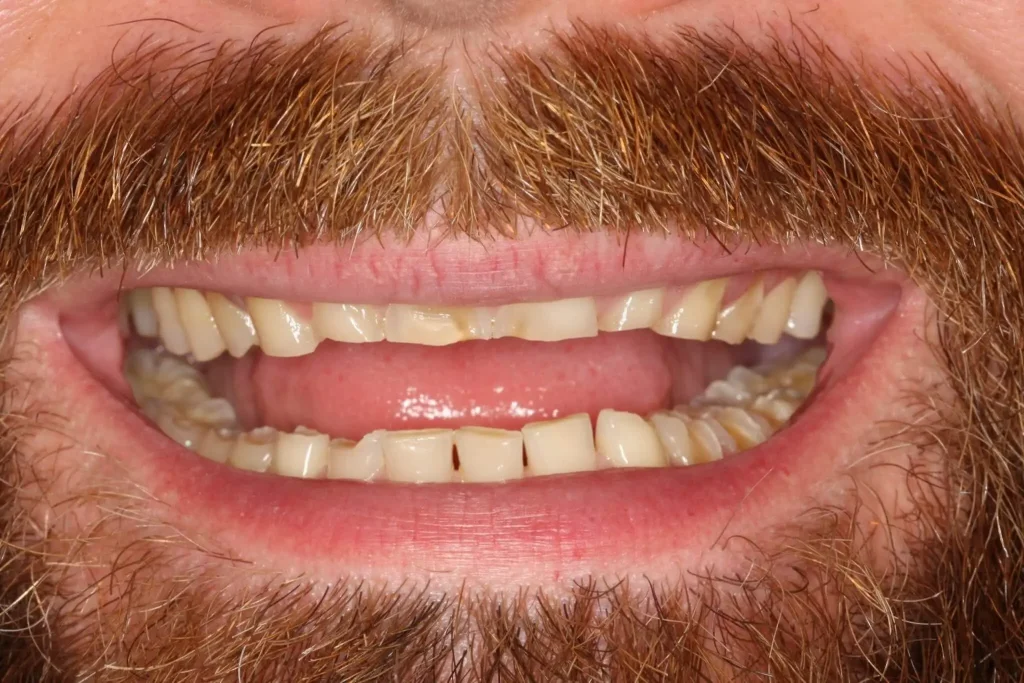
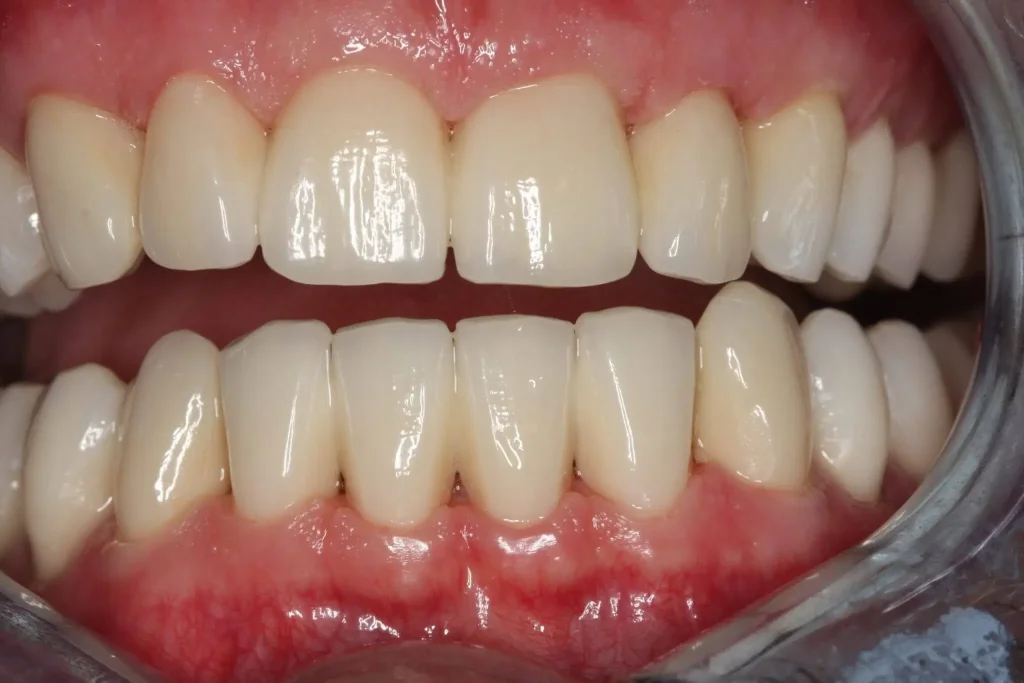
The photos show the initial condition with severely worn teeth and the result following a custom-planned bite elevation.
What are the limitations of bite correction?
A bite elevation is a comprehensive procedure that must be carefully planned. If the height is altered too drastically or if the trial phase is skipped, muscle discomfort, joint problems, or an unfamiliar sensation when speaking may occur. For this reason, each new position is first tested using a splint or temporary restorations. After treatment, a night guard protects the new teeth from grinding again. Our technical article “Bite Elevation with All-Ceramic Restorations” explains how the final ceramic restoration is performed. If the entire dentition is affected, the treatment is usually planned as a 4-quadrant restoration.

Holistic re-planning for worn teeth and a misaligned bite.
About Our ServicesFrequently Asked Questions
What is a bite lift?
A bite restoration is the process of restoring the natural bite height when the teeth are severely worn down due to grinding, clenching, or other causes. It ensures healthy function of the masticatory system and can relieve pressure on the temporomandibular joints.
What symptoms can indicate a lowered bite?
Common signs include worn-down, short teeth, pain in the temporomandibular joint, and tension in the chewing and neck muscles. However, these symptoms can also have other causes and should therefore be evaluated as part of a thorough examination.
How does a bite lift work?
First, the new bite height is tested using a splint or temporary restorations. Then, dental restorations—such as crowns, veneers, or bridges—are placed to permanently stabilize the optimal bite height.
What is CMD and how is it related to bite alignment?
CMD (craniomandibular dysfunction) refers to a dysfunction of the temporomandibular joint and the masticatory muscles. An altered bite can—along with factors such as stress and clenching—contribute to symptoms. Whether a bite-raising splint will help can only be determined after a functional analysis and a trial period with the splint.
Scientific Basis
Guidelines on this topic
This professional article is based on the current guidelines and scientific reports issued by the dental professional associations (DGZMK/AWMF).
- S2k GuidelineOcclusal splintsDGZMK · AWMF · 2024PDF
- S3 GuidelineAll-ceramic fixed implant-supported restorationsDGZMK · AWMF · 2024PDF
- GuidelinePDF
- Scientific CommunicationAftercare for Dental ProstheticsDGPro · 2011PDF
- Scientific CommunicationPDF
- Scientific CommunicationTemporary Fixation of Fixed Dental ProstheticsDGZMK · 2025PDF
- Scientific CommunicationTreatment of Craniomandibular Dysfunction (CMD)DGFDT · 2022PDF
Guidelines are decision-making tools for dentists. We’ll determine which treatment is right for you during a personal consultation.
You Might Also Be Interested In

Jaw Function & Pain (TMJ)
Craniomandibular Dysfunction (CMD) in Cases of Malocclusion

Contact & Directions
You can find us here
Address
Friedrichstraße 186,
, 10117 Berlin
U Stadtmitte (U2, U6)
U Hausvogteiplatz (U2)
Opening hours
Mon–Thu 8:00 a.m.–8:00 p.m.
Fri 8:00 a.m.–6:00 p.m.
Telephone
Acute pain outside of office hours? Dental emergency service: 030 – 89004-333 or www.kzv-berlin.de


