Modeled on nature: ceramic dentures
Don't we all wish we could bite hard and smile brightly with our natural teeth for the rest of our lives? But even with the best care and conscientious prevention, teeth can be lost: Through dental disease or accidents. If we are affected by tooth loss, we need dentures that optimally replace the lost teeth in terms of function and aesthetics. This is where modern dentistry relies on ceramic dentures. In this interview, dentist Prof. Dr. Andreas Olze, owner of the dental practice Prof. Dr. Andreas Olze and colleagues in Berlin Mitte, explains the advantages of this type of restoration and for whom it is suitable.
What are the best properties of ceramic from a dental point of view?
Prof. Dr. Olze: " Ceramics combine outstanding esthetics with impressive oral durability and convincing strength values. In addition, the composition of all-ceramic materials is very similar to that of natural tooth enamel. Furthermore, ceramic does not release any significant active substances in the mouth and therefore has no measurable allergenic effect.
What are the advantages of ceramic dentures?
Prof. Dr. Olze: " Ceramic dentures are particularly impressive due to their excellent aesthetics, durability and compatibility. Allergy sufferers can also be provided with dentures without any problems.
All-ceramic dentures can be planned and manufactured using modern CAD/CAM processes. To what extent does this make treatment easier for the patient and the dentist?
Prof. Dr. Olze: CAD/CAM stands for "Computer Aided Design / Manufacturing", which means that both planning and production are carried out with the help of a special computer. The patient's individual oral situation is recorded with a special intraoral camera and scanned into the computer. The dental prosthesis is then planned here - the fit and functionality can be checked realistically in advance. Once the planning is complete, the data is transferred to a special milling machine, which - controlled by the computer - mills the desired denture from a ceramic blank. I see the great advantage of this technique in the fact that patients can experience the final result at a very early stage. This provides a great deal of security, especially for extensive restorations. In addition, rationalized digital processes result in shorter treatment times.
Ceramic inlays can be an alternative to traditional fillings. Are they suitable for every patient?
Prof. Dr. Olze: For me, ceramic inlays are the best treatment option for small to medium-sized substance defects. Due to their outstanding fit, oral stability, esthetics and functionality, inlays last longer in the patient's mouth, even for life. Although the investment required for inlays is higher than for resin fillings, the subsequent investment is significantly lower due to the properties mentioned above. Added to this is the time saving.
Veneers are a popular ceramic restoration solution. What can patients expect from them and how are they used?
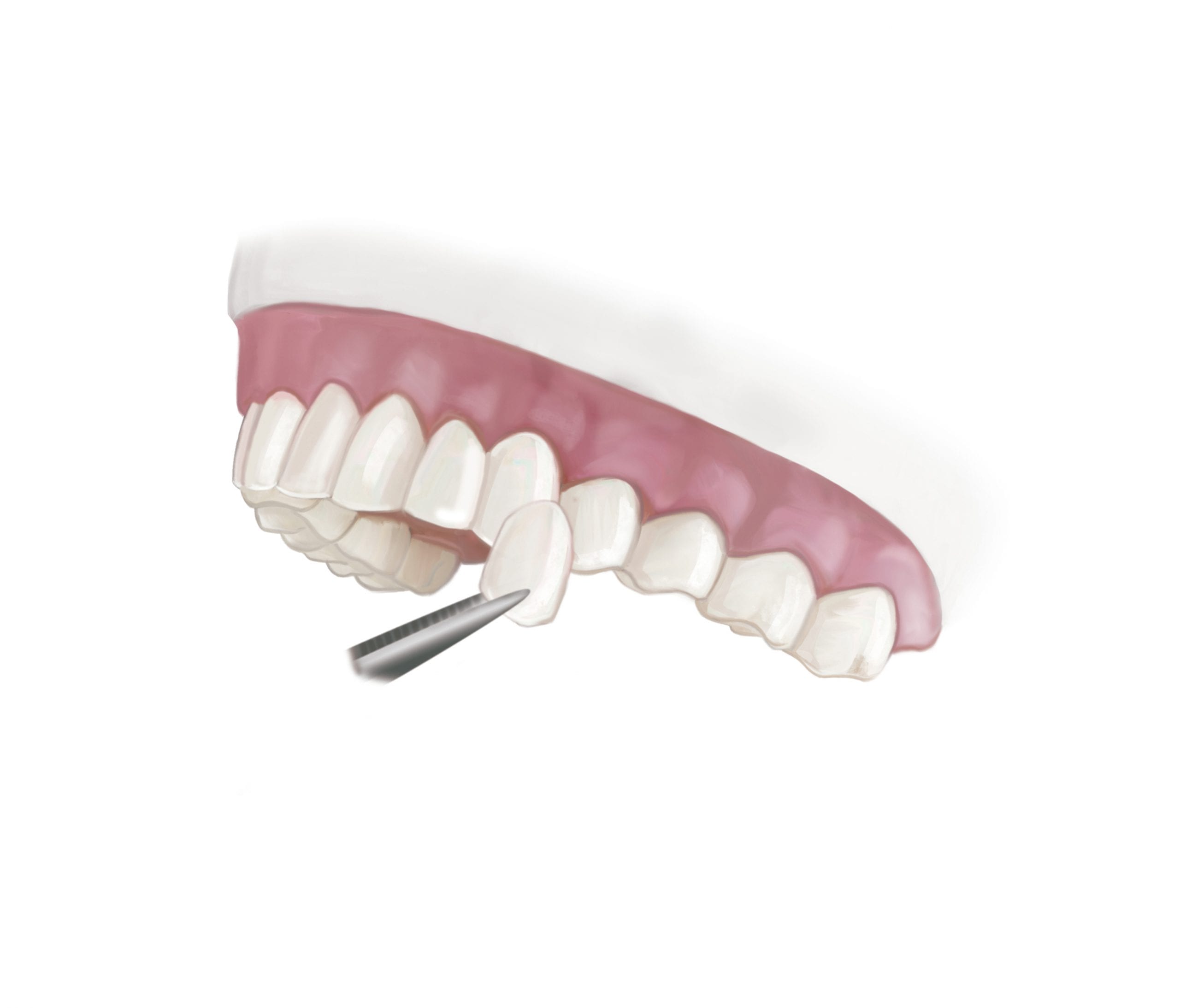
Prof. Dr. Olze: Veneers are wafer-thin ceramic veneers that are used for the minimally invasive, highly aesthetic correction of tooth gaps or misaligned teeth. They are bonded to the minimally ground teeth and are mostly used in the anterior region: for example, for broken incisal edges, permanent discoloration, tooth gaps and small to medium substance defects.

If teeth have been lost, there are various ways to compensate for this. When is a ceramic crown the best solution?
Prof. Dr. Olze: All-ceramic crowns are used when larger substance defects need to be restored. This is often the case after root canal treatment: the teeth, which have been severely weakened in their structure, must then be permanently restored. Bite elevations and complex prosthetic restorations with dentures can often only be achieved with the help of partial or full crowns. Of course, it is not possible to say in general terms when an all-ceramic crown is the right restoration solution for a patient. Your dentist in Berlin, Prof. Dr. Andreas Olze & Kollegen, will be happy to advise you individually on the subject of dental prostheses. We look forward to hearing from you!