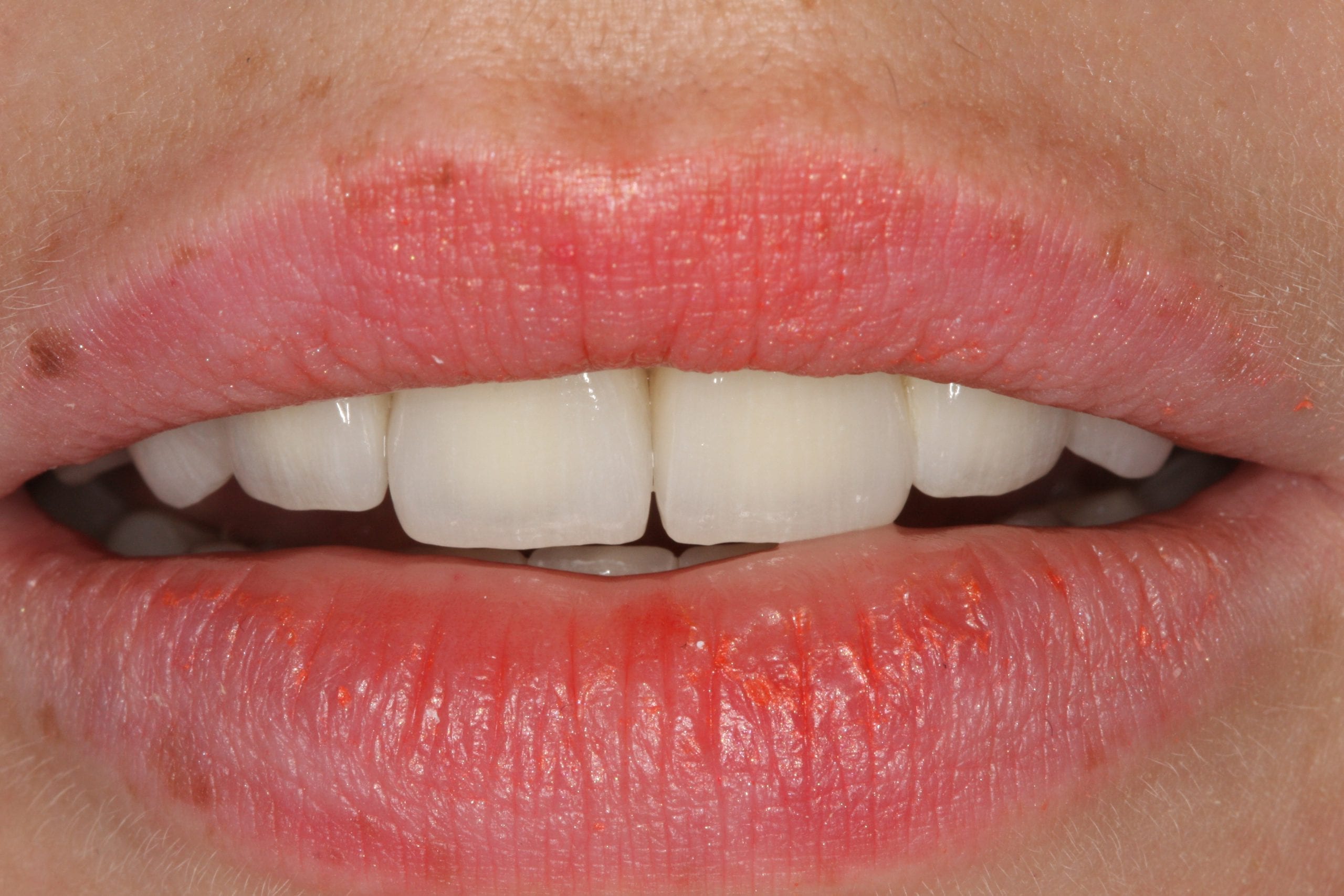
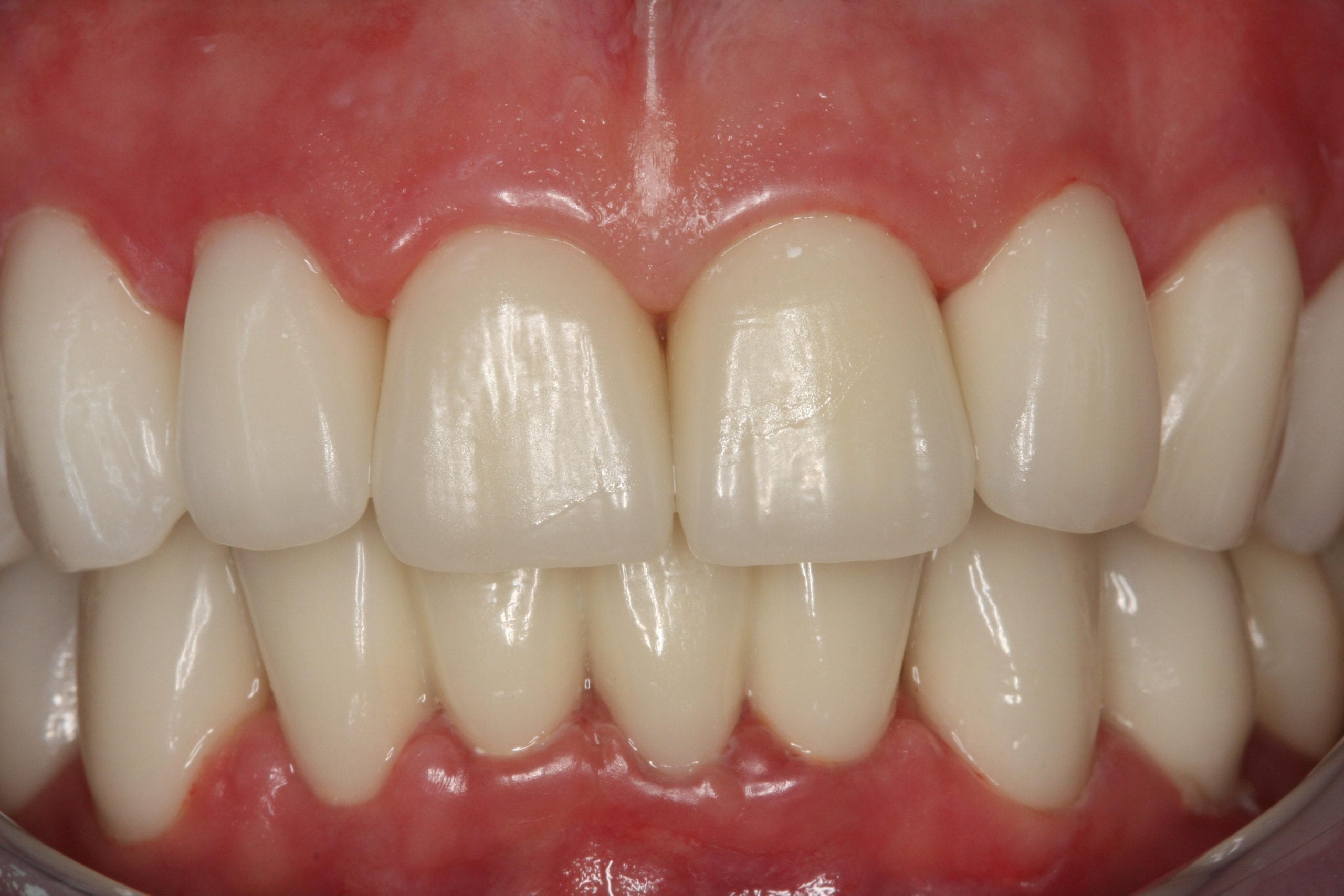
Worn teeth - Interview with Prof. Dr. Olze on the subject of abrasive dentition
Worn teeth caused by stress-related grinding or clenching are unfortunately very common. In this interview, Prof. Dr. Andreas Olze explains the consequences of an abraded bite caused by wear and tear, how the jaw can be restored to its normal state and what needs to be considered. The dentist is the owner of the dental practice Prof. Dr. Andreas Olze and colleagues in Berlin Mitte and, among other things, an expert in the field of aesthetic dentistry. He treats his patients using modern methods and the latest findings.
What are the possible causes of an abraded dentition?
Prof. Dr. Olze: There are various reasons for the development of generalized abrasive dentition. I most frequently observe that affected patients relieve stress through their teeth by grinding or clenching them more. This problem typically affects so-called "doers", i.e. people who are under a lot of stress at work.
In this group of people, this often coincides with an extremely healthy diet rich in fiber with corresponding abrasive properties. In conjunction with the increased intake of healthy but acidic fruit or fruit juices, the loss of tooth structure in the occlusal surface area is often further exacerbated.
In addition, adrenaline-pumping sports are often practiced, so that the associated proverbial "gritting of teeth" also leads to loss of substance.

I remember one patient in particular. Highly successful professionally, slim and trim, very sporty (flying license, marathon etc.), sales representative, who was constantly traveling from customer to customer at speeds of up to 200 km/h in his southern German sports car and also raced in his free time. I found the full picture of an abrasion in his mouth.
What are the symptoms of an abraded dentition?
Prof. Dr. Olze: Those affected notice a progressive shortening of their teeth. Damaged incisal edges are found relatively suddenly in the anterior region.

With further progression and complete loss of enamel, the darker dentin becomes prominent, and hypersensitivity may also occur at this stage.
As the disease progresses, there may be problems with the pronunciation of certain sounds.
In addition, further problems can gradually arise as the bite drops. For example, the pressure of the lower front teeth on the upper front teeth can increase, resulting in tooth migration in the upper front teeth. Ultimately, the drop in the bite can lead to CMD-like problems. Those affected then report pain and tension in the chewing and neck muscles.
In extreme cases, tinnitus and associated illnesses and symptoms can occur.
What needs to be considered before treating an abrasion denture?
Prof. Dr. Olze: If you wanted to go into all the aspects here, you would have to fill entire books. Therefore, I can only briefly discuss the preparatory measures here.
First of all, the dentist and patient should discuss the diagnosed condition in detail. Patients usually think that restoring their anterior esthetics can be done in a few simple steps. In the course of the discussion, the patient must then develop a willingness to take the necessary time for the treatment in the first place.
Once this stage has been reached, it is crucial to develop a very forward-looking and comprehensive treatment plan for those affected. As the entire dentition usually has to be included in the treatment, teeth that cannot be preserved in the long term must be identified. It is no secret that after such extensive treatment, patients can expect a long treatment-free interval. Patients often set higher standards here than would generally be applied to high-quality home electronics or household appliances.
In connection with the planning, situation models are produced. The dental technician then creates a diagnostic wax-up. Here, the dental technician restores the lost tooth substance with white wax and determines which teeth need to be included in the treatment. A mock-up is then created on the basis of the wax-up. This mock-up is made of white esthetic plastic and represents the design for the subsequent restoration. The mock-up can be placed in the patient's mouth during the consultation appointment. This allows the patient to get an idea of the future result before the drill is used for the first time. We often give this mock-up to patients to take home with them for further confidence building and testing. This allows them to evaluate the planned result at their leisure and, if necessary, discuss it with partners and other trusted persons. As pronunciation usually also changes with the planned dentures, it is useful to read aloud from books etc. with the mock-up in place and practise the phonetics.
Once this stage has been reached, a bite splint is fabricated based on the mock-up and its bite height. The reaction of the temporomandibular joints to the new bite situation is tested by wearing the splint.
Once the temporomandibular joints have proven to be unresponsive and the patient has responded positively to the mock-up, a further consultation is scheduled. During this consultation, it should be established and confirmed, if possible, that a fundamental relationship of trust has been established between the patient and the practitioner. This is the necessary basis for the subsequent comprehensive treatment. Any remaining questions should already be clarified at this point.
Can the damage be completely repaired by abrasion?
Prof. Dr. Olze: As a rule, yes, and at the highest aesthetic level.

How long does the treatment of worn teeth take?
Prof. Dr. Olze: With regard to the actual duration of treatment, two different case constellations must be distinguished without the planning phase described above and without further preliminary treatment in the sense of caries removal or improvement of existing root fillings, etc:
If no teeth need to be removed and/or smaller tooth gaps are treated with conventional, fixed and highly aesthetic all-ceramic dentures , the treatment takes about three to four weeks with about four to five appointments.
If larger gaps are to be treated with implant-supported dentures and if larger bone augmentations are also required in this context, the entire treatment usually takes about a year, whereby longer periods must be waited for the implants and the patient's own bone to heal. During this time, however, patients are provided with highly aesthetic and fixed long-term temporary restorations so that their quality of life is not impaired.
Who bears the costs?

Prof. Dr. Olze: Unfortunately, the statutory health insurance funds only cover a small proportion of the costs, as only the principle of "sufficient, economical and necessary" applies here. Specifically, this means that, for example, crowns and bridges to lift the bite and restore chewing function are reimbursed with fixed allowances. However, no ceramic veneers are paid for in the entire posterior region and on the inside of the front teeth. All-ceramic restorations are not covered by the above-mentioned fixed allowances.
We therefore draw up comprehensive treatment and cost plans prior to treatment. After patients have submitted these to their health insurance company, there is often a lengthy correspondence with the cost bearers, in the course of which we substantiate the medical necessity of the planned measures. We, your dentist in Berlin-Mitte, are very happy to support our patients in this regard.