


Cosmetic Dentistry
Cosmetic dentistry doesn't always start with veneers: Why function is the foundation of a beautiful smile
Cosmetic Dentistry and Functional Rehabilitation
The combination of cosmetic dentistry and functional rehabilitation—how severely damaged, worn, or functionally unstable dentition can first regain stable chewing function before cosmetic reconstruction begins.

Key Points at a Glance
- A beautiful smile requires a functionally stable foundation consisting of teeth, gums, temporomandibular joints, masticatory muscles, and bite alignment.
- In cases of severely worn, damaged, or unstable teeth, restoring chewing function is often the first step—not the veneer.
- Severe wear does not automatically mean that a bite adjustment is necessary; the need for treatment is assessed on a case-by-case basis.
- Functional pretreatment, the material used, and post-treatment care all play a role in determining durability—veneers remain an option as long as the conditions are right.
A beautiful smile is more than just a matter of tooth color or perfect tooth shape. What really matters is the harmonious interaction between the teeth, gums, temporomandibular joints, masticatory muscles, and bite alignment. Only when these structures are functionally coordinated can cosmetic dental treatment be successful in the long term.
In modern cosmetic dentistry, the focus is often on veneers, high-quality all-ceramic restorations, Digital Smile Design, and minimally invasive front tooth corrections. These procedures yield impressive aesthetic results. However, not every initial situation is suitable for immediately proceeding with veneers or individual cosmetic corrections.
Especially in cases of severely worn teeth, extensive dental defects, missing posterior teeth, or an unstable bite, another question must first be answered: Is the dentition even capable of supporting a new aesthetic restoration in a way that is both functional and long-lasting?
In cases of damaged dentition, restoring chewing function is often the crucial first step. Only on this foundation can an aesthetic reconstruction be developed that not only looks beautiful immediately after treatment but is also durable in the long term and biologically sound. The combination of aesthetic dentistry and functional rehabilitation is therefore an essential component of advanced restorative dentistry.
Cosmetic dentistry is more than just beautiful teeth
Cosmetic dentistry focuses on the harmonious design of teeth, gums, and smiles. This involves tooth color, shape, alignment, proportions, and how the teeth fit into the individual’s facial features. Established procedures include:
- Veneers for the aesthetic correction of the front teeth.
- All-ceramic crowns and partial crowns.
- Aesthetic composite restorations.
- Anterior tooth restorations.
- Teeth Whitening.
- Digital planning of aesthetic changes.
- Orthodontic corrections.
Each of these procedures has its own specific indications. They can yield very good results if the biological and functional conditions are right. However, a fundamental problem arises if the initial situation is not sufficiently stable.
For example, a patient may want brighter and longer front teeth. Upon closer examination, however, it becomes apparent that the back teeth are severely worn, several fillings have been damaged, and the front teeth have already suffered significant loss of tooth structure due to an unfavorable distribution of bite forces. If, in this situation, only the front teeth were restored with veneers, the actual problem might persist. The new restoration would then have to function under the same unfavorable conditions as the original teeth.
Cosmetic dentistry must not be planned in isolation from the function of the entire masticatory system.
What is functional rehabilitation?
In short,functional rehabilitation refers tothe restoration or improvement of the function of the masticatory system when the teeth, periodontium, temporomandibular joints, or masticatory muscles are compromised by disease, tooth loss, abrasion, erosion, or other changes. The focus is on achieving a functionally resilient dentition.
Occlusion—how the teeth fit together
Occlusion refers to the contact relationships between the teeth of the upper and lower jaws. It influences how chewing forces are distributed among the individual teeth. Both the contacts when the teeth are closed and the dynamic contacts during movements of the lower jaw are relevant. In the case of extensive rehabilitation, the following must therefore be examined:
- Which teeth are in contact?
- Are the loads distributed in a functionally appropriate manner?
- Are there any problematic tooth contacts?
- How do the front and back teeth respond to movements of the lower jaw?
- Are there any cases of tooth migration or tilting?
- Is the existing occlusal height suitable for the planned restoration?
The goal is not to achieve an idealized or perfectly symmetrical occlusion in every patient. Rather, the aim is to create a stable functional situation that is tailored to each individual.
The vertical dimension—how high is the bite?
A particularly important factor in cases of severely worn dentition is the vertical dimension of the occlusion, also known as bite height. It describes the vertical distance between the upper and lower jaws when the teeth are in contact.
In cases of significant loss of tooth structure, the original shape of the tooth may change considerably. However, whether this has actually reduced the occlusal height must be determined on a case-by-case basis. The reason: The dentition can partially compensate for progressive loss of tooth structure through tooth movement and dentoalveolar compensatory mechanisms.
Significant wear does not automatically mean that an occlusal adjustment is necessary. If a change in vertical dimension is detected or if additional restorative space needs to be created for a reconstruction, a targeted adjustment of the occlusal height may be appropriate. This requires careful diagnostic and restorative planning.
The temporomandibular joints and the masticatory muscles
The temporomandibular joints and the masticatory muscles enable the complex movements of the lower jaw. Therefore, comprehensive rehabilitation must also take into account any potential functional disorders. These include:
- Pain in the masticatory muscles.
- Joint pain.
- Limited mouth opening.
- Joint noises.
- Teeth clenching and grinding.
- Difficulty eating.
Craniomandibular dysfunction (CMD) can have various causes. It is not necessarily due to misaligned teeth or an improper bite. Therefore, functional treatment should be based on a comprehensive diagnosis and not solely on the assumption that changing the occlusion will resolve all symptoms.
Why Cosmetic Dentistry Shouldn't Always Start with Veneers for Damaged Teeth
Veneers are thin shells that are primarily attached to the visible surface of the front teeth. They are suitable for correcting certain aesthetic irregularities, such as:
- Discoloration.
- Shape deviations.
- Small gaps between teeth.
- Mild misalignment of the teeth.
- Irregular cutting edges.
- Certain defects in the front teeth.
When the initial condition is suitable, veneers can provide a treatment that preserves a great deal of tooth structure and offers excellent aesthetic results. The situation is different, however, when the teeth are already severely damaged.
If a significant amount of tooth structure has already been lost
In patients with severe abrasion, attrition, or erosion, the teeth may have already lost large portions of their natural shape. The incisal edges are shortened, the occlusal surfaces are flattened, and in some cases, dentin is exposed. In such cases, the goal is no longer simply to improve the appearance of the visible teeth. Rather, the first step is to restore the lost tooth structure and, if necessary, the functional conditions required for a stable restoration.
When the back teeth no longer function properly
The posterior teeth play a major role in chewing. If several molars are severely damaged or missing, the distribution of forces throughout the dentition can change. This can place greater stress on the remaining teeth. Tooth migration, changes in occlusal relationships, and functional problems may also occur. A restoration of the front teeth focused solely on aesthetics would not resolve this situation.
If the front teeth are already overloaded
In certain occlusal situations—such as a pronounced deep bite or loss of posterior support—the anterior teeth may be subjected to excessive stress. If veneers are placed in this situation without assessing the functional conditions, the new restoration may continue to be exposed to unfavorable stresses.
This does not mean that veneers are generally unsuitable for cases with complex functional requirements. They simply need to be incorporated into an overarching functional treatment plan.
When the occlusal height and the available space for restoration are unclear
In cases of severely worn teeth, it is often not immediately clear what the original tooth shape or bite height should be. If the front teeth were lengthened in isolation, the result might appear aesthetically unbalanced or might not function properly with the rest of the teeth. Therefore, the proportions of the teeth, the vertical dimension, the movements of the lower jaw, and the existing tooth contacts must all be evaluated together.
"Veneers are a cosmetic treatment option—but they are not a substitute for necessary functional rehabilitation."
Typical scenarios in which function takes precedence over aesthetics
The importance of functional rehabilitation is particularly evident in patients with complex dental damage.
Teeth severely worn down due to bruxism
Bruxism involves repeated or persistent clenching or grinding of the teeth. The consequences can include:
- Loss of tooth structure.
- Flattened chewing surfaces.
- Shortened front teeth.
- Cracks and fractures.
- Damage to existing fillings and crowns.
- Hypersensitivities.
- Muscle-related complaints.
In cases of significant loss of tooth structure, comprehensive restorative treatment may be necessary. First, the causes and risk factors must be identified and the extent of the damage assessed. Subsequently, a customized restoration plan can be developed that includes, for example, composite restorations, ceramic partial crowns, onlays, or other appropriate restorations. For patients with nocturnal bruxism, a custom-fitted protective splint may be advisable following definitive rehabilitation.
When definitive changes to the jaw relationship are planned, the current S3 guideline recommends considering or performing functional-analysis-based preliminary treatment using occlusal splints and/or long-term temporary restorations (Recommendation 19).
Acid-Related Tooth Damage and Erosion
Acid-induced loss of tooth structure results from repeated exposure to acids, which can erode the enamel and, later, the dentin as well. Possible causes include:
- Frequent consumption of acidic beverages.
- Reflux disorders.
- Repeated vomiting.
- Certain dietary habits.
- Occupational exposure to acids.
The affected teeth may lose their natural contour. Significant loss of tooth structure can occur, particularly along the incisal edges and chewing surfaces. In such cases, it is important to identify and control the cause of the erosion as much as possible before proceeding with the final restoration. The restorative treatment should preserve as much natural tooth structure as possible.
Loss of posterior tooth support
If several posterior teeth are missing, the load on the remaining dentition may change. Not every missing tooth needs to be replaced automatically. The key factors are the existing occlusal contacts, individual function, and the long-term prognosis. However, if posterior support is insufficient, a more comprehensive restoration may be necessary. Depending on the initial situation, this may include implants, bridges, partial crowns, or other types of dental restorations.
Dentures that are severely damaged or have undergone extensive restoration
Some patients have received numerous fillings, crowns, and other restorations over many years. Over time, these restorations can wear down, develop leaks, or fracture. When several teeth are affected at the same time, a systematic, comprehensive treatment plan makes more sense than replacing individual restorations in isolation.

The Path to Comprehensive Aesthetic and Functional Rehabilitation
Comprehensive rehabilitation should be carried out in stages. The order in which the stages are completed is crucial.
Phase 1: Comprehensive Diagnostics and Treatment Planning
The process begins with a detailed examination of the entire set of teeth. Among other things, the following are assessed:
- Dental findings: Condition of individual teeth; existing fillings, crowns, and bridges; dental caries and loss of tooth structure; vitality and endodontic status, if relevant.
- Periodontal findings: gum health; probing depths; bleeding on probing; tooth mobility; condition of the periodontal tissues.
- Functional findings: static and dynamic occlusion; contact relationships between the dental arches; mandibular movements; temporomandibular joints and masticatory muscles; signs of bruxism or TMD.
- Aesthetic Assessment: Tooth proportions; tooth color; tooth alignment; visibility of the teeth when speaking and smiling; gum line; relationship of the teeth to the face.
Depending on the findings, digital scans, X-rays, photographs, and an instrumental functional analysis may be appropriate. Diagnostic measures should always be tailored to the specific clinical question.
Phase 2: Stabilizing Oral Health
Before beginning a comprehensive aesthetic and functional reconstruction, any active diseases must be treated. These include, for example:
- Treatment of tooth decay.
- Treatment of periodontitis.
- Treatment of Acute Dental Injuries.
- Endodontic treatment of teeth worth saving, as needed.
- Control of factors contributing to erosion.
- Counseling for Bruxism.
Healthy gums and sufficiently stable teeth form the biological foundation for long-term dental success.
Phase 3: Functional Pretreatment and Testing
In cases of complex rehabilitation, it may be advisable to first test the planned functional changes using reversible methods or long-term temporary restorations. For example, custom-made occlusal splints or temporary restorations can be used for this purpose. Among other things, the following questions are examined:
- Is the planned bite height comfortable for everyday use?
- Is chewing comfortable?
- Are the tooth contacts designed appropriately?
- Are there any new symptoms?
- Is the planned anterior tooth alignment functionally feasible?
- Does the planned tooth shape meet aesthetic expectations?
Such a trial period is not absolutely necessary for every patient. Its importance depends on the individual's risk and the extent of the planned change.
Phase 4: Restoration of Functional Dental Structures
This is followed by the actual functional reconstruction. Depending on the findings, the following procedures may be used:
- Direct composite restorations.
- Ceramic onlays and partial crowns.
- All-ceramic crowns.
- Reconstruction of the anterior tooth alignment.
- Implant-supported dentures.
- Bridges or other prosthetic restorations.
A key goal is to restore a stable and individually tailored occlusion. In doing so, as much healthy tooth structure as possible should be preserved.
Phase 5: Aesthetic Design of the Dentition
Only once the functional requirements have been sufficiently clarified is the final aesthetic result actually implemented. The following are used here, for example:
- Veneers.
- All-ceramic anterior crowns.
- Partial crowns and onlays.
- Composite restorations.
- Cosmetic gum procedures when medically indicated.
- Digital Aesthetic Planning.
The aesthetic design takes into account the newly created functional situation. Tooth shape, length, width, color, and position must harmonize with both the face and the occlusion.
Phase 6: Follow-up Care and Long-Term Stability
Comprehensive rehabilitation does not end with the placement of the final ceramic restoration. Regular checkups are necessary to assess the stability of the restorations and detect any potential changes early on. When indicated, these include:
- Checking the occlusion.
- Examination of ceramic and composite restorations.
- Examination of implants and gums.
- Professional teeth cleaning.
- Personalized follow-up care for periodontitis.
- Mouthguards for bruxism.
The long-term prognosis depends not only on the materials used, but also on the initial biological condition, the extent of exposure, and consistent follow-up care.
Bite Correction and Aesthetic Reconstruction – When the Original Tooth Shape Has Been Lost
Bite elevation is particularly important in patients with significant loss of hard tooth structure. If the teeth have become significantly shortened or flattened over the years, it may be necessary to redefine the vertical dimension of the occlusion for the reconstruction. In this context, a distinction must be made between two situations:
- The bite height is indeed reduced.
- The teeth are severely worn, but the original occlusal height has been largely preserved through compensatory mechanisms.
This distinction is essential for treatment planning. A bite elevation is not a standardized procedure for every patient with worn teeth. Rather, an assessment is made to determine whether additional restorative space is needed and whether a change in the vertical dimension is medically appropriate. The planning may take the following aspects into account, among others:
- Face height and lip profile.
- Tooth proportions.
- Interocclusal space.
- Phonetic requirements.
- Temporomandibular joints and masticatory muscles.
- Occlusal contact relationships.
- Planned restoration materials.
- Remaining tooth structure.
When a change is planned, a temporary or provisional restoration can help validate the treatment plan clinically.
The current international consensus on the rehabilitation of worn dentition emphasizes, in particular, the importance of minimally invasive direct and indirect restorations. The question of whether a preliminary evaluation phase is necessary when increasing the vertical dimension is also under discussion. However, the available evidence does not support a blanket requirement for such a phase in every treatment case.
Which materials are suitable for functional and aesthetic rehabilitation?
The choice of material depends on the size of the defect, the remaining tooth structure, the load, and aesthetic considerations.
Composite – Tooth-Preserving Restoration
Direct composite restorations can be a valuable treatment option, particularly in cases of hard tooth structure loss.
- Advantages: often very gentle on tooth structure; allows for direct repairs; good aesthetic adaptability; suitable for additive reconstructions; in many cases, more cost-effective than indirect ceramic restorations.
- Limitations: Wear and discoloration; need for repair and maintenance; dependence on the clinical situation and the manufacturing process.
Lithium disilicate – aesthetic and functional ceramic
Lithium disilicate is a high-performance ceramic that, due to its optical properties and strength, is suitable for many aesthetic and functional restorations. Possible indications include veneers, partial crowns, onlays, crowns, and anterior tooth reconstructions. When selecting this material, the material thickness, preparation, bonding surface, and functional load must be taken into account.
Zirconia—high strength when used for the appropriate indications
Zirconia can be particularly useful for certain prosthetic restorations subjected to high loads. Depending on the material generation and indication, it is suitable for crowns and bridges as well as other restorative applications. Its aesthetic properties vary depending on translucency and material composition.
Even the highest-quality material cannot compensate for poor treatment planning. Long-term function also depends on the preparation, the adhesive restoration, the design of the occlusion, the initial biological condition, and follow-up care. Therefore, the choice of material should always be part of an overarching treatment plan.
Digital Smile Design and Functional Dentistry—How Do They Go Together?
Digital planning methods have significantly expanded the possibilities of aesthetic dentistry. With Digital Smile Design, tooth shapes and proportions can be visualized using photographs, digital scans, and other patient data. This facilitates better communication between the patient, the dentist, and the dental laboratory.
However, digital aesthetic planning must always be aligned with the functional situation. A virtually perfect smile does not necessarily equate to a functionally suitable treatment outcome. In the case of complex rehabilitation, the following information must therefore be taken into account:
- Facial and lip proportions.
- Tooth alignment and tooth shape.
- Occlusal relationships.
- Movements of the lower jaw.
- A place for restoration.
- Material Requirements.
- Biological Prerequisites.
Digital planning can support this information and improve communication. However, it does not replace clinical diagnosis. The combination of digital smile design and functionally oriented restorative planning is particularly valuable.

Why a Comprehensive Treatment Plan Is Crucial in Complex Aesthetic Cases
When multiple teeth are affected, it is often not enough to plan individual cosmetic treatments in isolation. This is where synoptic dentistry comes into play. It integrates the various dental disciplines into a comprehensive treatment plan. A patient with severely worn front and back teeth may require the following treatments simultaneously:
- Periontal Pre-treatment.
- Tooth-preserving measures.
- Functional Diagnostics.
- Treatment of Bruxism.
- Reconstruction of the posterior teeth.
- Restoration of the anterior occlusion.
- Aesthetic anterior tooth restoration.
These procedures must be performed in a medically sound sequence. A comprehensive treatment plan ensures that aesthetic restoration is not carried out independently of the functional situation. Especially in cases of extensive rehabilitation, collaboration between the dentist, dental technician, and, if necessary, other specialists is crucial.
The goal is not to provide the most extensive treatment possible, but rather a solution that is individually appropriate, functionally stable, and as minimally invasive as possible.
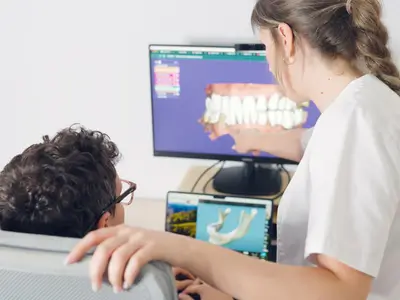
To learn how we combine function and aesthetics in our treatment plans—from diagnosis to the final restoration—please visit our services page on Cosmetic Dentistry in Berlin Mitte.
A clinical example: Restoring a harmonious set of teeth from severely worn ones
A patient presents with a desire for cosmetic improvement of his front teeth. He feels his teeth are too short, the cutting edges are flattened, and the tooth color appears uneven. At first glance, veneers seem like the obvious solution. However, a comprehensive examination reveals additional findings:
- Heavily worn molars.
- Several inadequate fillings.
- Signs of nocturnal bruxism.
- Changes in occlusal contact conditions.
- Shortened front teeth.
- Partially exposed dentin.
In this situation, it would not be advisable to treat only the visible front teeth. First, it is necessary to determine the causes of the loss of tooth structure and identify any functional changes. A comprehensive treatment plan will then be developed. This could include the following steps, for example:
- Treatment of active dental diseases.
- Examination of jaw function and bruxism.
- Planning the desired tooth shapes and occlusal relationships.
- Functional testing of the planned reconstruction.
- Restoration of posterior teeth.
- Reconstruction of the front teeth.
- A definitive aesthetic design.
- Individual protective and follow-up measures.
The result should not consist solely of longer and more harmoniously shaped front teeth. Rather, the goal is to create a set of teeth whose aesthetic design is coordinated with the overall chewing function. This example illustrates why aesthetic treatment for damaged teeth should often begin with functional rehabilitation.
What are the benefits of combining cosmetic dentistry with functional rehabilitation?
When used for appropriate indications, the combination of these two areas offers several advantages.
- Aesthetics and function are planned together. The shape of the tooth is not designed in isolation, but in relation to the occlusion and the movements of the lower jaw.
- Healthy tooth structure can be better protected. By adopting a defect-oriented and minimally invasive approach, unnecessary removal of tooth structure can often be avoided.
- The load-bearing capacity of the restoration is taken into account. The restorations are tailored to the individual’s functional needs.
- Complex problems are identified early on. Through comprehensive diagnostics, functional and biological risks can be taken into account even before definitive treatment is provided.
- Treatment is planned for the long term. It is not only the immediate aesthetic result that matters, but also the ability to repair the restoration, follow-up care, and long-term durability.
- Treatment is becoming more personalized. Not every patient needs veneers. Sometimes composite restorations, partial crowns, crowns, orthodontic treatment, or a combination of different procedures is more appropriate.
- Patients can make more informed decisions. A clear, comprehensive treatment plan allows them to understand the various treatment options and their respective advantages and disadvantages.
Conclusion: Function first, aesthetics second—a fundamental principle of modern dentistry
Cosmetic dentistry and functional rehabilitation go hand in hand when a set of teeth has already sustained significant damage. Veneers, all-ceramic restorations, and digital cosmetic planning offer excellent options for creating a harmonious smile. However, they are not automatically the right first step in treatment.
In cases of severely worn, damaged, or functionally unstable dentition, the initial biological and functional status must first be assessed. This includes dental health, the condition of the periodontium, occlusal relationships, vertical dimension, the temporomandibular joints, and the masticatory muscles. Only on this basis can a decision be made as to which form of reconstruction is appropriate.
Sometimes veneers are the ideal solution. In other cases, the path to a beautiful smile begins with functional rehabilitation, bite reconstruction, or the restoration of severely damaged back teeth. After all, a truly beautiful smile isn’t just a matter of aesthetics— it also has to function properly.
Modern aesthetic and functional dentistry therefore combines natural dental aesthetics, biological tooth preservation, and stable masticatory function into a unified treatment approach.
Your Healthcare Providers
Who treats you for veneers and cosmetic restorations?
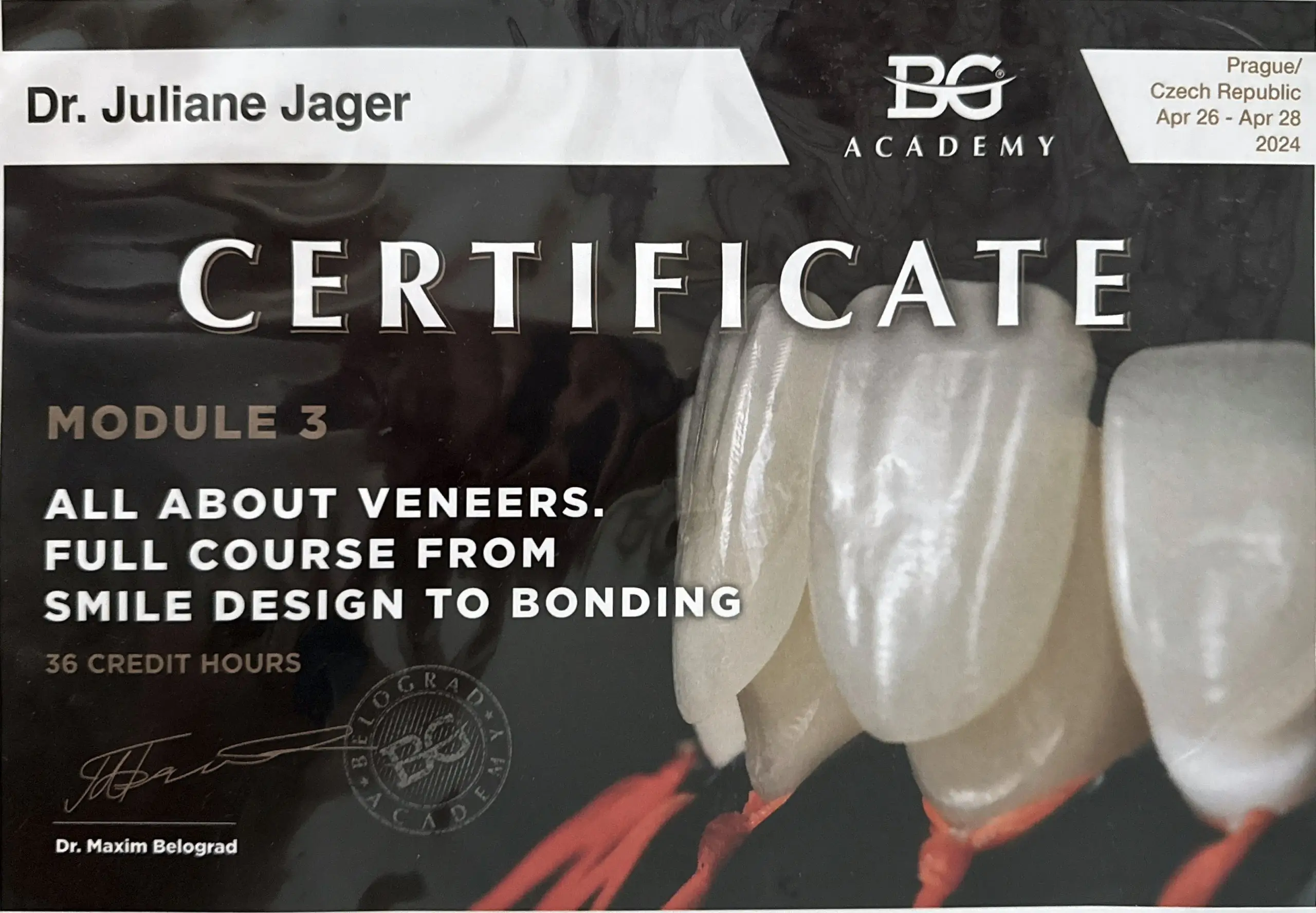
At our practice in Berlin Mitte, we plan veneers and aesthetic-functional restorations as a team—with Dr. Juliane Jager serving as our specialist for veneers, having completed advanced training in this area.
 Scientific Director · Responsible for this articleProf. Dr. med. dent. Andreas OlzeDirector of Dentistry and Adjunct Professor at Charité. With many years of experience in complex prosthetics and aesthetic reconstructions—including numerous veneer restorations—he is responsible for the overall planning of your treatment.About Me

Focus on Veneers & Aesthetics
Dr. Juliane Jager, M.Sc.
Dr. Jager has pursued specialized training in the field of veneers and aesthetic anterior tooth restorations. She combines aesthetic planning with functional diagnostics—precisely the approach described in this professional article.
We're here for you, too


Read more: Related articles
- Veneers Using a Minimally Invasive Technique
- Bite elevation and worn teeth
- Bite elevation with all-ceramics
- Anterior Tooth Restorations with Ceramic
- Holistic Dentistry
- MODJAW® and 4D Functional Diagnostics
- A dentist and dental technician all in one

Teeth whitening, veneers, and all-ceramic restorations for a naturally beautiful smile.
About Our ServicesFrequently Asked Questions
Why should the focus be on restoring function rather than aesthetics when treating severely damaged teeth?
In cases of severely damaged dentition, the occlusal relationships, tooth contacts, and force distribution may be altered. If, in such a situation, only the front teeth are restored for aesthetic purposes, unfavorable functional conditions may persist. Therefore, the entire initial situation should first be examined and, if necessary, functionally stabilized.
Does cosmetic dentistry always mean veneers?
No. Veneers are just one of many options in cosmetic dentistry. Depending on the diagnosis, composite restorations, all-ceramic crowns, partial crowns, onlays, teeth whitening, or orthodontic treatments may also be appropriate.
When are veneers not the right first-line treatment?
Veneers are not necessarily the right first step in cases of severely worn teeth, lack of posterior tooth support, extensive tooth defects, active periodontitis, or unexplained functional problems. First, it must be determined whether the conditions for a permanent restoration are met.
What does functional rehabilitation mean in dentistry?
Functional rehabilitation refers to the restoration of proper chewing function. This process takes into account tooth contacts, the vertical dimension, the temporomandibular joints, and the masticatory muscles. The goal is to achieve a resilient and individually tailored masticatory system.
What is a bite lift?
A bite elevation is a targeted adjustment of the vertical dimension of the occlusion. It may be necessary when additional space is needed for restorations due to severely worn teeth, or when reduced bite height needs to be restored for medical reasons. Not every patient with worn teeth requires a bite elevation. The indication must be determined on a case-by-case basis.
Can severely worn teeth be restored to look natural again?
Yes. Depending on the extent of tooth structure loss, teeth can be restored using composite resin, ceramic partial crowns, onlays, or crowns. In cases of more extensive damage, comprehensive functional and aesthetic restoration may be necessary.
What does teeth grinding have to do with cosmetic dentistry?
Bruxism can lead to significant loss of tooth structure, shortened incisal edges, and damaged restorations. Therefore, when restoring aesthetics, the occlusal load must also be taken into account. When indicated, a protective splint can be part of the long-term treatment plan.
Is a bite adjustment recommended for CMD?
That depends on the individual diagnosis. CMD has multiple causes. Raising the bite is not a general standard treatment for CMD and should only be performed if there is a specific restorative or functional indication.
Is it necessary to wear a bite splint before every major dental restoration?
No. Splint therapy is not necessary for every patient. However, it may be appropriate in cases of certain functional complaints or when changes in the jaw relationship are planned. The current AWMF Guideline 083-051 describes the relevant indications and its use in the preprosthetic phase.
What is functional pretreatment?
In functional pre-treatment, planned changes to the dentition are first evaluated diagnostically and, if necessary, tested with temporary restorations. This may include occlusal splints or long-term temporary restorations. The goal is to assess the planned functional outcome before the final restoration is placed.
What role does the vertical dimension play in aesthetic design?
The vertical dimension affects the available space for restorative procedures and the relationship between the upper and lower jaws. It is therefore important in the reconstruction of severely worn teeth. At the same time, the planned tooth shape must harmonize with the lips, face, speech, and masticatory function.
Is it possible to increase the bite height without grinding down all the teeth?
In appropriate cases, additive reconstruction is possible. This involves, for example, applying composite or ceramic restorations to the existing tooth structure. Whether this is possible depends on the available space, tooth position, occlusion, and the specific material requirements.
Which materials are suitable for a comprehensive aesthetic and functional restoration?
Depending on the situation, composite, lithium disilicate, and zirconia may be considered. The choice of material depends on the extent of the defect, the remaining tooth structure, the functional demands, and the aesthetic requirements.
How long does comprehensive functional and aesthetic rehabilitation take?
The duration of treatment depends on the initial condition. A simple restoration can be completed in just a few appointments. For extensive dental reconstructions involving preliminary treatment, functional testing, and a final restoration, treatment may take several months.
Is functional rehabilitation always more expensive than treatment with veneers?
Not necessarily. The costs depend on the extent of the necessary treatment. However, in complex cases, comprehensive rehabilitation may require more treatment steps than a standalone cosmetic procedure. The key factor is which measures are medically necessary and make sense in the long term.
What is the difference between cosmetic and restorative dentistry?
Cosmetic dentistry focuses on the harmonious appearance of the teeth and the smile. Restorative dentistry deals with rebuilding damaged or lost tooth structure and restoring function. In complex treatments, these two fields overlap.
Can digital smile design planning replace functional diagnostics?
No. Digital Smile Design supports aesthetic planning and communication with patients and dental technicians. However, it cannot replace clinical functional diagnostics. The two approaches complement each other.
Why is a comprehensive treatment plan useful for complex dental restorations?
Because different areas of treatment must be coordinated. Tooth preservation, periodontology, function, implantology, and aesthetics should not be considered in isolation. A comprehensive treatment plan helps determine the sequence and goals of the individual procedures.
Can veneers be placed even after functional rehabilitation?
Yes. Once the functional requirements have been met and the indication has been assessed, veneers can be a valuable component of the final aesthetic restoration. The key factors are the remaining tooth structure, the bonding surface, and the patient’s individual bite forces.
What is the most important goal of an aesthetic and functional dental restoration?
The goal is a set of teeth that looks natural, is functionally robust, and can be maintained over the long term. Aesthetics and function should not be pitted against each other, but rather planned in tandem.
Scientific Basis
Guidelines & Reference Materials on This Topic
This professional article is based on current AWMF guidelines as well as international consensus documents and review articles. Consensus documents and case reports are not equivalent to evidence-based S3 guidelines—the specific treatment decision is always based on the individual findings.
- S3 GuidelineDiagnosis and Treatment of BruxismDGZMK · DGFDT · AWMF 083-027 · 2026PDF
- S2k GuidelineOcclusal splints for the treatment of craniomandibular disorders and for preprosthetic therapyAWMF 083-051 · 2024PDF
- S2k GuidelinePDF
- ConsensusIoannidis et al.: Rehabilitation Strategies and Considerations Regarding Occlusal Vertical Dimension in the Management of Worn DentitionsJ Esthet Restor Dent · 2025DOI
- ReviewChantler et al.: Rehabilitation of Worn Teeth Using Direct and Indirect Minimally Invasive Approaches – Systematic Review and Meta-AnalysisJ Esthet Restor Dent · 2025DOI
- ConsensusLoomans et al.: Severe Tooth Wear – European Consensus Statement on Management GuidelinesJ Adhes Dent · 2017DOI
- OverviewÖzcan et al.: Aesthetic and Functional Rehabilitation of Worn TeethClin Dent Rev · 2021DOI
- StudyFradeani et al.: Aesthetic rehabilitation of worn teeth using a minimally invasive prosthetic procedure (MIPP)Int J Esthet Dent · 2016PubMed
- Case ReportYaghoobi et al.: Full-mouth rehabilitation of severely worn teeth within the current vertical dimension – 3-year follow-upClin Case Rep · 2023DOI
Guidelines are decision-making tools for dentists. We’ll determine which treatment is right for you during a personal consultation.
You Might Also Be Interested In


Contact & Directions
You can find us here
Address
Friedrichstraße 186,
, 10117 Berlin
U Stadtmitte (U2, U6)
U Hausvogteiplatz (U2)
Opening hours
Mon–Thu 8:00 a.m.–8:00 p.m.
Fri 8:00 a.m.–6:00 p.m.
Telephone
Acute pain outside of office hours? Dental emergency service: 030 – 89004-333 or www.kzv-berlin.de


